Smart Lock Installation Cost in NYC: What the Door Adds
Smart lock installation in NYC costs $275 to $500, depending on the lock and the door. The number moves with the lock you pick and the door it goes on, and it does not move with the borough: our published price tiers are set by the hour of the visit, not by whether the door is in Brooklyn, the Bronx or Manhattan.
Searches for this job split by borough, but the cost drivers are the same everywhere. This guide covers what you are actually paying for, what the door adds, and the two approvals New York renters and co-op owners need before anything gets drilled.
What the price includes
A smart lock install has three parts. The lock itself is the first, and it is the widest-ranging line, because the same installation labor sits behind a basic keypad deadbolt and a camera-equipped model. The second is the installation: removing the old deadbolt, fitting the new one, setting the strike, and testing the bolt throw. The third is the setup, which is pairing the lock to an app, a hub or Wi-Fi, and adding the first codes.
We stock most of the popular models, and the installed total lands in the $275 to $500 range we publish, whether the price is mostly the lock or mostly the door preparation. The service call depends on the hour: $65 during business hours (8 a.m. to 6 p.m.), $125 after hours (6 p.m. to 2 a.m.) and $195 late night (2 a.m. to 7 a.m.).
Why two apartments can price differently
The door is the variable that surprises people. A smart deadbolt expects a standard bore: a 2-1/8 inch hole in the door face and a 1 inch hole in the edge. Most modern doors have it. Many do not.
Pre-war doors in brownstones and walk-ups can be thicker than the lock is built for, or have a mortise case where a bored deadbolt would normally sit, a situation covered in pre-war mortise lock repair. Hollow-core doors may need a reinforcement plate so the lock is not the strongest part of a weak door. Fire-rated steel doors, common in newer apartment buildings, carry a label, and the work has to preserve the rating, which limits what can be cut and how.
All of that is labor, and a technician who sees a photo of the door before the visit can usually tell you which category it falls in. Sending one is the single best way to get a firm quote.
Smart lock types, and what each costs in practice
There are four common setups, and the setup is where the long-run cost lives, more than the lock sticker.
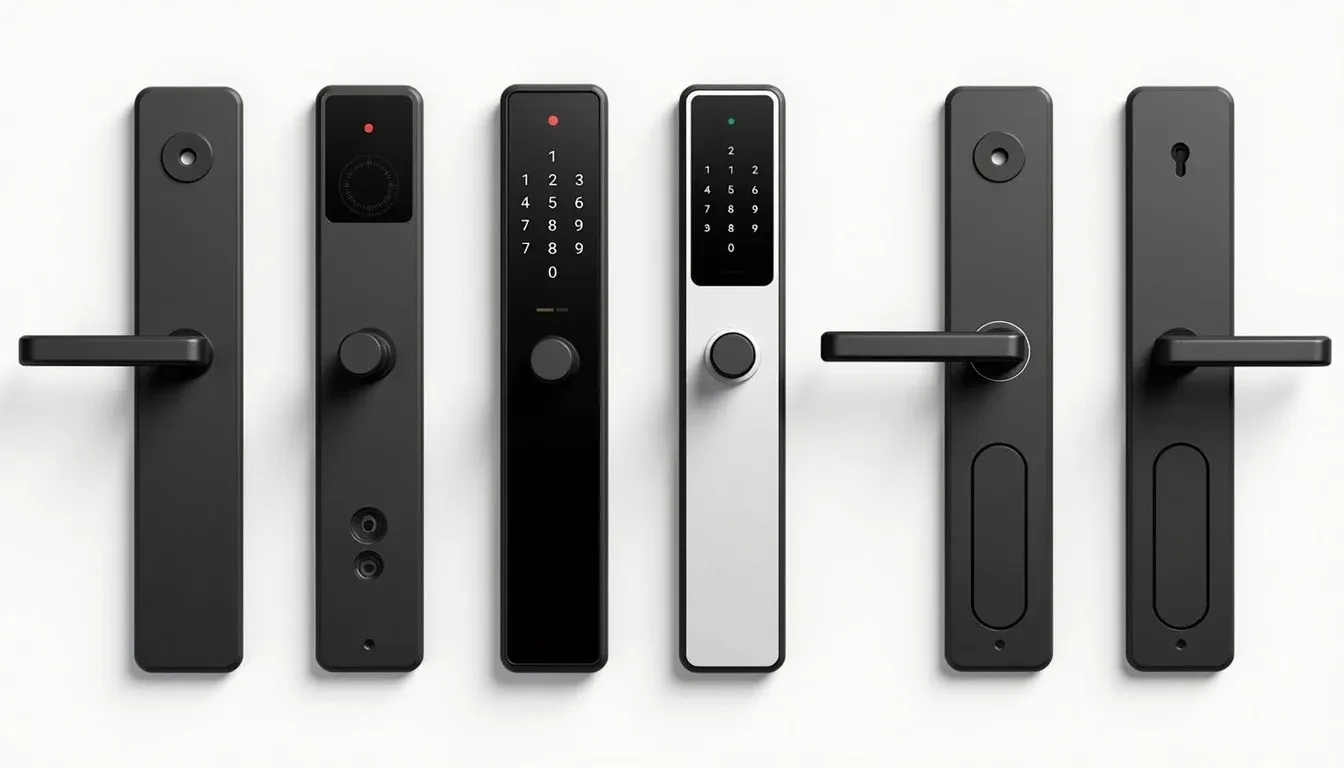
A keypad deadbolt has no app and no connectivity. It is the simplest and cheapest, and for many apartments it is the right answer, since it solves the lost-key and shared-code problem without a cloud account. A Bluetooth lock pairs to a phone within range, which suits a single household. A Wi-Fi lock reaches you anywhere and adds remote codes and logs, at the cost of battery life. A hub-based lock, using Z-Wave or Zigbee, ties into a larger smart-home system and needs the hub set up.
The installation price barely changes between them. The setup time does, and so does the question of what happens when the Wi-Fi is down. Every one of them should keep a key override and a way to open from the inside without a code. The post on keypad and keyless door locks in NYC compares what each one is good for.
The two approvals before anyone drills
Renters and co-op owners cannot always install a smart lock freely, and the check is cheaper than the mistake.
A renter in a multiple dwelling can add a small lock of their own under Multiple Dwelling Law §51-c. Replacing the owner's primary deadbolt with a smart one is a different request, and the owner has to agree. Most landlords say yes to a lock that opens with a key as well as a code, and no to one they cannot get into during a repair or an emergency. The guide to smart locks for NYC rentals lists what to put in the request.
Co-ops add a board layer. Many proprietary leases and house rules restrict door hardware, and some require the board or the managing agent to hold a key. The post on smart locks in NYC co-ops covers how to get one approved when the board has not already decided.
The rule that overrides every feature
Any lock on an apartment door has to open from the inside without a key or special knowledge, and the NYC Administrative Code sets the shape of the dwelling-unit lock: a heavy duty deadbolt keyed from outside, with a thumb-turn on the inside.
Most smart deadbolts meet that, because they keep a mechanical thumb-turn. The ones to avoid are keyed on both sides or controlled only by a code from the inside. FDNY door lock requirements explains the egress principle behind it and why a lock that fails to open from the inside is a fire-safety problem before it is a legal one.
What to ask before you buy
Ask four things. Does it keep a physical key override? Does the inside have a thumb-turn that works with no power? What happens to the codes when the battery dies, and how long does the battery last on this model? And can it be installed on your door as it is, or does the door need work?
If the answer to the last question is "it depends," send the technician a photo and a measurement of the door thickness. That turns an estimate into a number.
How to get a firm price
A firm quote has the lock, the installation labor, the setup and the service call as separate lines. A smart lock installation quote that bundles them hides the pieces you can compare, which are the lock and the labor.
If you are choosing between a smart lock and a restricted-key upgrade, the two solve different problems. A smart lock removes the physical key problem. A high-security lock makes the physical key uncopyable. Some doors want both, and the cost of each is the cost of the whole.
Power, batteries and what happens when they fail
A smart lock runs on batteries, usually standard AA cells, and every model should warn you before they die. Treat the warning as a deadline: replace the batteries on a schedule and not when the lock complains, and keep spares in the apartment, not inside the door.
Keep the physical key override, and keep a copy of the key somewhere other than the apartment. Many models also have contacts on the outside to power the lock from a battery briefly, so a dead battery does not become a lockout. Ask which your model has before you buy.
Codes, sharing and turnover
The practical advantage of a smart lock is the codes. You can give a guest, a cleaner or a dog-walker their own code and remove it afterward, without cutting a key or rekeying. For a landlord or a short-term host, changing a code between guests replaces a rekey, a use covered in the NYC Airbnb lock setup guide.
Set the lock to re-lock on its own, and use expiring codes for anyone who is not a permanent member of the household. A code that never expires is a key that never comes back.
Installation day, step by step
The visit follows a standard order. The technician removes the old deadbolt and checks the bore and the door thickness. They fit the new lock and the strike, and check that the bolt throws freely with no rubbing. They test it with the door open and closed. They pair the lock to the app or hub and add the first codes. And they show you the override key and how to release the thumb-turn from inside.
Ask to be walked through the manual release before the technician leaves. If the lock works only when the app does, it is not finished. A smart lock installation should end with the door opening three ways: code, key and thumb-turn.
Frequently Asked Questions
How much does smart lock installation cost in NYC? $275 to $500, depending on the lock and the door. The service call is $65 in business hours and higher after hours.
Does the price change by borough? Not in our published pricing. The price depends on the hour of the visit, the lock and the door, not on whether you are in Brooklyn, Manhattan or the Bronx.
Can I install a smart lock on a rental door? You can add a small lock under Multiple Dwelling Law §51-c, but replacing the owner's primary deadbolt needs the owner's agreement. Ask in writing and offer a duplicate key.
Will a smart lock work on an old pre-war door? Often, but the door may need work. Thick doors and mortise cases change the installation, so send a photo and the door thickness before booking.
Does a smart lock need Wi-Fi? No. Keypad and Bluetooth models work without it. Wi-Fi adds remote access and logs at the cost of battery life.
Need Expert Help?
If you have questions about any of the security solutions discussed in this article, our team is ready to provide expert guidance.
Call us at (844) 912-1908 for a free consultation or to schedule a service.