High-Security Lock Cost in NYC: $225 to $500 an Opening
A high-security lock in NYC costs $225 to $500 per opening installed, and the starting price is $225 per cylinder. That is roughly nine times the $25 hardware-store cylinder it replaces, and the reason is not the metal. It is the key: a restricted, patent-protected blank that nobody can copy without your say-so.
This guide breaks down where the money goes, which brands cost what class of money, and how to tell whether the upgrade is worth it for your door.
What you pay for beyond the cylinder
A standard $25 cylinder is built to a price, with a keyway that every hardware store stocks the blank for. A high-security cylinder is built to a standard. The hardware is rated UL 437 and ANSI Grade 1, which tests resistance to picking, drilling and forced attack, and the key blank is restricted by patent so copies come only through an authorized dealer.
Three lines make up the price. The cylinder is one, and the service call is another, priced by the hour at $65 during business hours (8 a.m. to 6 p.m.), $125 after hours (6 p.m. to 2 a.m.) and $195 late night (2 a.m. to 7 a.m.). Labor and any door preparation are the third. A complete master-key plan for a building is quoted on site, since it depends on how many doors and how many levels of access you need.
The four brands that dominate NYC's secure buildings
SwiftLocksmith specifies and installs Medeco, Mul-T-Lock, Abloy and Schlage Primus, and each earns its place for a different reason.
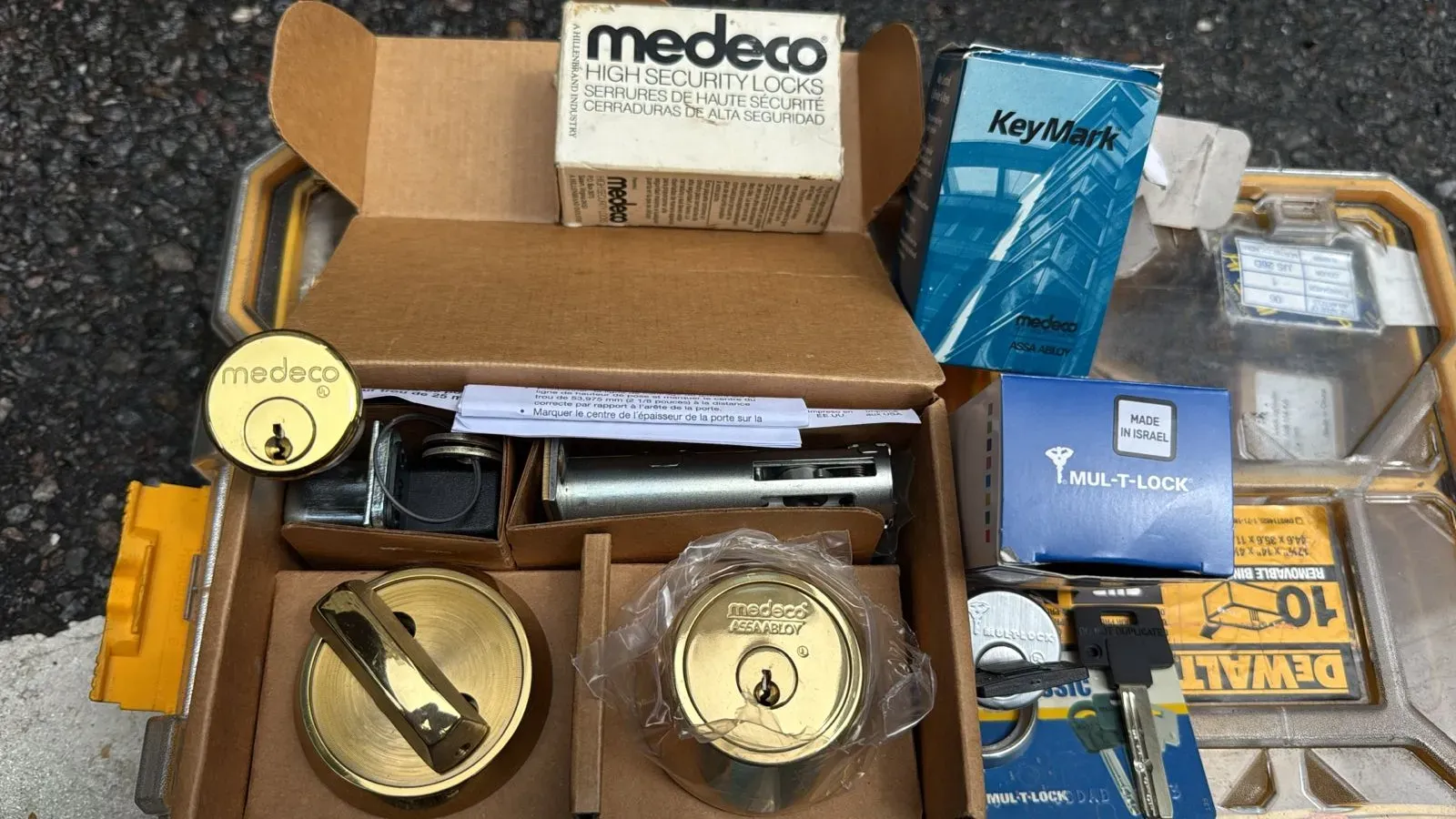
Medeco, in the Maxum, Classic and M3 lines, is the name most New York co-ops and commercial buildings default to, with a patented sliding-pin design and a hardened 1 inch bolt on the Maxum deadbolt. Mul-T-Lock uses a telescoping pin system with patent-protected keys and drops into an existing mortise or rim case. Abloy uses a disc-based mechanism with no pins to pick, favored where picking resistance matters most. Schlage Primus adds a sidebar that controls keying, common in commercial Manhattan offices.
Price depends on the opening count, the door and the keying, not on the logo, and each opening is quoted before work starts. How the brands compare head to head is in Medeco vs Mul-T-Lock and Schlage vs Mul-T-Lock, and the short version is that the choice comes down to your door and your keying needs, not to which logo is better.
Why the key is the real product
The restricted blank is what separates this from an upgraded deadbolt. Ordinary keys can be copied in a minute at any kiosk, so a contractor, an ex-partner or a former employee can clone one without anyone knowing.
A restricted key cannot be copied that way. Each cylinder is keyed to a unique blank, and only you, or a person with your written authorization plus a notarized signature card on file with the installer, can ever order another copy. That process is slow on purpose. It is also why extra keys cost more than a kiosk copy, a point covered in high-security key duplication in NYC.
What actually raises the cost
Several things push a quote above the $225 floor, and all are fair to ask about.
Opening count is the first, since a door with a deadbolt and a rim lock is two cylinders. The door itself is next. A door that needs boring or reinforcing before the lock goes on adds labor, and a thin pre-war door may need the work described in door reinforcement for NYC apartments. Keying structure is the last: a single key for two locks, or a master-key plan, takes design time. Extra keys and key cards are priced per piece.
When it is worth it, and when it is not
A high-security cylinder protects against a specific set of attacks: picking, drilling, forced attack and unauthorized copying. If those are your real risks, it is money well spent. Two situations qualify clearly. You have had keys in circulation you cannot account for, such as a former employee or a contractor. Or your door faces a hallway or street where forced entry is a realistic worry.
It is not worth it when the door or frame is the weak point. A $450 cylinder in a hollow door with a flimsy strike plate stops no one. The honest sequence is door, frame and strike first, then the cylinder, a point developed in do you need high-security locks in NYC.
Rentals, co-ops and the approval question
A high-security upgrade on a rental or a co-op is rarely a free choice. A rental tenant may add a small lock under Multiple Dwelling Law §51-c, but replacing the owner's primary cylinder needs the owner's agreement. A co-op board may restrict what you can install, covered in co-op door lock rules.
Ask before you buy. A restricted keyway that the building cannot get a copy of can also make the super's emergency access harder, and a landlord who agreed to a rekey may not agree to that.
Getting a firm number
Ask for the cylinder price, the labor, the service call and the key count in writing before any work starts. Ask who holds the key authorization and what happens if you lose the signature card. The answer should be a clear process, not a shrug.
For a single apartment door, the high-security lock service quotes the opening count and the keying together. For buildings, the quote is on site, because the structure of the system is the cost.
Costs people forget
Extra keys are the first. A restricted key costs more than a kiosk copy, and ordering one means the authorization step described above, so buy the number of keys you need at installation, when the process is already open, not a year later.
Key cards are the second. A signature card ties authorization to named people, and the list on it should be chosen deliberately. Door work is the third, covered above. The last is the hour: a high-security job booked late at night carries the $195 service call, and nothing about this upgrade is an emergency, so book it in business hours at $65.
A worked example: one apartment door
Take a street-facing apartment door with one deadbolt that the building lets you upgrade. One restricted cylinder starts at $225 installed. Add two extra keys through the authorization process, the $65 service call in business hours, and a reinforced strike if the frame needs one, and the job sits inside the $225 to $500 per opening range we publish. Two openings, say a deadbolt and a rim lock keyed alike, roughly doubles the cylinder cost and saves a second trip. This is how the pieces add, not a quote.
If you already own a high-security lock
Owning one does not mean you can never change who holds a key. If a key is lost, the cylinder can often be rekeyed through the dealer, which ends the old key without replacing the hardware, and the new keys are ordered under the same authorization.
Tell the technician the brand and, if you have it, the signature card before the visit, because the card is what lets the dealer cut. If the card is lost, ask what the dealer's process is, since it can add days. A key duplication request on a restricted key follows the same rules.
Frequently Asked Questions
How much does a high-security lock cost in NYC? $225 to $500 per opening installed, starting at $225 per cylinder. The range depends on the brand, the keyway and whether the door needs preparation.
Is a Medeco lock worth the money? For a door with real exposure, such as a street-facing entrance or keys that have been loose, yes. Its restricted keyway and hardened bolt protect against copying and forced entry. For an interior door in a low-risk building, a good Grade 1 standard lock is usually enough.
Can a locksmith copy a high-security key? Only with authorization. The blank is restricted, so copies come through an authorized dealer, with your written authorization and a notarized signature card on file.
Can I put a high-security lock on a rental door? You may add a small lock of your own without permission, but replacing the owner's primary cylinder needs the owner's agreement. Ask first.
How long does installation take? A single cylinder is quick. A door that needs preparation or a master-key plan takes longer, and a firm timeline comes with the on-site quote.
Need Expert Help?
If you have questions about any of the security solutions discussed in this article, our team is ready to provide expert guidance.
Call us at (844) 912-1908 for a free consultation or to schedule a service.