Smart Locks in NYC Rental Apartments: A Tenant's Guide
Yes, you can put a smart lock on your NYC rental apartment door if you pick the right kind. A retrofit unit that mounts on the inside of the door and keeps your landlord's existing lock and keys working is the renter's move; swapping out the whole deadbolt is the kind of alteration standard leases require your landlord's permission for, and you want that permission in writing. New York State law also guarantees most apartment-building tenants (buildings of three or more units) the right to add a second lock of their own, up to three inches in circumference, and voids any lease clause that charges you for it.
That is the short version. The long version involves a state statute almost everyone cites incorrectly, a city privacy law written after a Hell's Kitchen landlord replaced lobby keys with an app, and a security deposit you would like back. Here is how all three shake out.
Scope note: this guide is for rentals. Co-op or condo? The gatekeeper is a board, not a landlord. That world has its own guide.
Start here: no law says "smart lock"
No NYC or New York State statute grants tenants the right to install a smart lock by name. Your legal hooks are older and more general: a state-law right to add a lock of your own, and your lease's alteration clause for anything that modifies the landlord's lock. Nearly every tenant-installed smart-lock question resolves through one of those two doors; landlord-installed keyless systems answer to a third law, covered below.
Your add-a-lock right: MDL § 51-c
New York's Multiple Dwelling Law § 51-c makes it lawful for a tenant of a multiple dwelling (generally a building where three or more families live independently) to install and maintain their own lock on the apartment entrance door, in addition to the lock the landlord supplies, as long as the lock is not more than three inches in circumference.
You will see NYC Admin Code § 27-2043 cited for this rule all over the internet. Wrong section. § 27-2043 is the owner's duty: providing a key lock in your entrance door, at least one key, and in a class A multiple dwelling a heavy-duty latch set, deadbolt, and chain door guard. The tenant's right to add a lock lives in state law, not city code.
Three details inside § 51-c that matter:
- Duplicate key on request. You must give the landlord a duplicate key to your added lock if they ask; the duty is triggered by their request, not automatic. But do not play games here: the NY Attorney General's Residential Tenants' Rights Guide warns that refusing "can be construed as a violation of a substantial obligation of the tenancy and can lead to eviction proceedings."
- No fees. Any lease provision requiring you to pay for exercising this right is, in the statute's words, "void as against public policy and wholly unenforceable."
- Exclusions. The right does not cover buildings run by a municipal housing authority (NYCHA), and it does not cover hotels, motels, or dormitories.
Retrofit vs. replacement: the decision that decides everything
Renter smart locks come in two families, and the legal analysis flips between them.
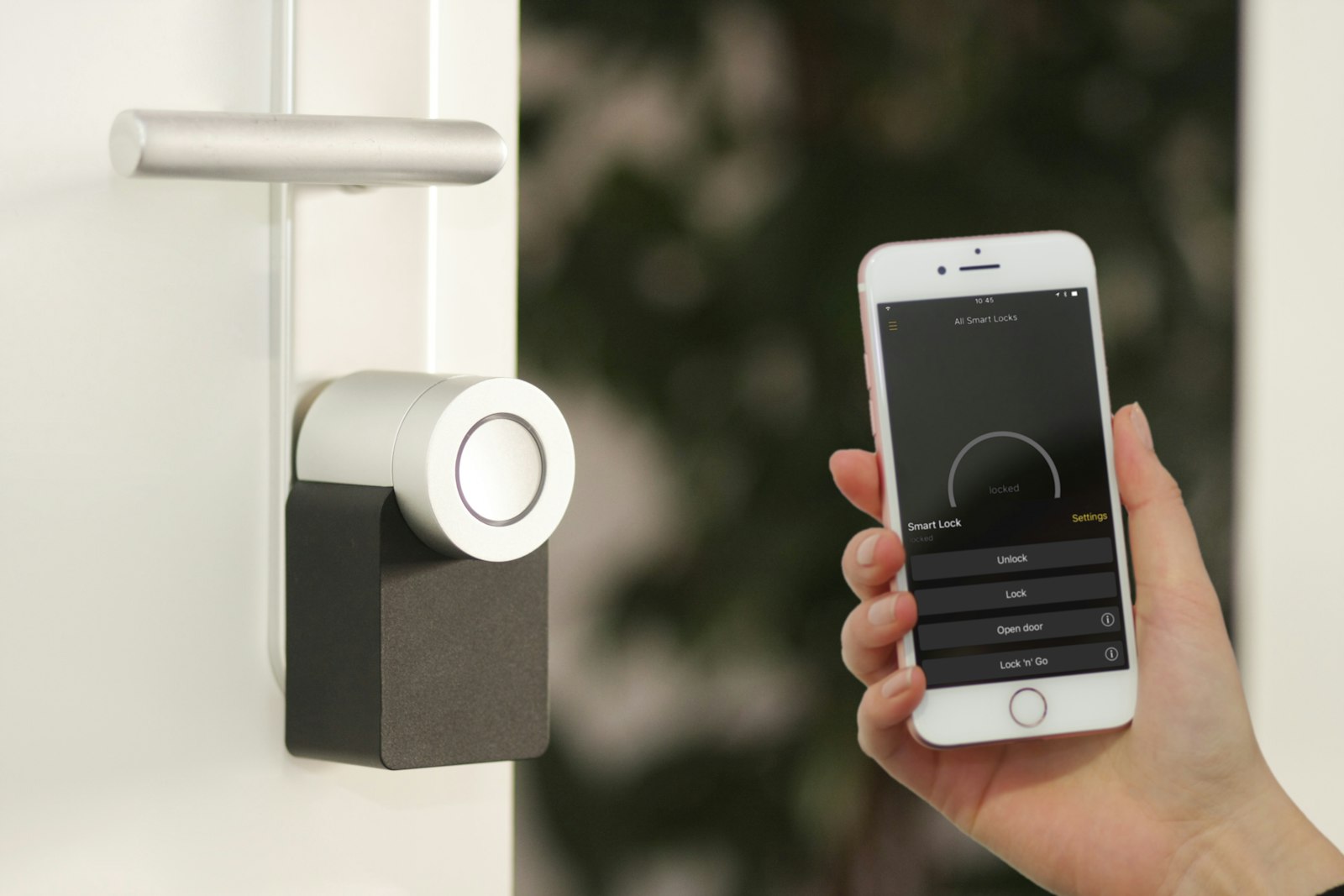
Retrofit units leave the landlord's lock alone. August's own install page says it plainly: "All August Smart Locks simply attach to your existing deadbolt, on the inside of your door," and "since it does not change the exterior of your lock your keys will still work." Level Bolt does the same trick invisibly, swapping the interior bolt mechanism while the landlord's exterior trim, cylinder, and keys keep working: a screwdriver install, no drilling. SwitchBot-style units go further still: they grip the existing thumb-turn with adhesive, drill nothing, and peel off when you leave.
The common thread: the hallway side of the door is untouched, the landlord's key keeps working, and the building's emergency access survives. That is why retrofits are the ones landlords approve, and the smart lock installs we do most in NYC rental buildings.
Replacement smart deadbolts remove the landlord's cylinder. A keypad unit that swaps the entire deadbolt takes the landlord's key out of the picture. MDL § 51-c protects an additional lock only (the text says "in addition to the lock or locks supplied by the landlord"), so as we read it, a full swap falls under your lease's alteration clause. That means permission first, in writing.
One more wrinkle for the keyless-curious: NYC's Housing Maintenance Code requires the unit-door deadbolt in a class A multiple dwelling to be operable by a key from the outside. No court has ruled on how that applies to a keyless-only replacement, but our read as locksmiths is that a rental apartment door with no keyway sits on the wrong side of that requirement. If you replace, pick a model with a keyway.
Getting the landlord's yes
In practice, NYC landlords approve smart locks more often than renters expect, on conditions. Standard leases bar alterations without consent, and owners who say yes typically condition it on keeping emergency access: a working key, a code, or both. Get the approval in writing, even if it is just a short email thread.
What to put in the request:
- The exact model, with one line on what it does to the existing lock. "Mounts on the interior; your key continues to work" does a lot of lifting.
- Who installs it. A licensed locksmith reads better to a landlord than "my roommate has a drill."
- What happens at move-out: you remove it and restore the original hardware.
If the answer is no on a replacement, a retrofit usually still gets a yes. And if the answer is no on everything, § 51-c still lets you add a conventional second lock without asking anyone.
The Hell's Kitchen case that changed the rules
In September 2018, the owners of a W. 45th Street complex in Hell's Kitchen put the Latch smart-lock system on the lobby, mailroom, and elevator, replacing physical keys for those doors with a smartphone app. Five tenants sued in March 2019, alleging harassment and invasion of privacy: the app collected location data shareable with the landlord, and elderly residents (one 93 years old) suddenly could not operate their own lobby.
In May 2019, a judge signed off on a settlement requiring the landlords to hand over physical keys; the tenants had them that same night. But a settlement binds only its parties. It set no precedent. The durable, citywide rule arrived two years later.
The Tenant Data Privacy Act: your rights in a keyless building
NYC's Tenant Data Privacy Act (Local Law 63 of 2021, codified at Admin Code §§ 26-3001 through 26-3007) regulates "smart access buildings": class A multiple dwellings that use key fobs, RFID cards, mobile apps, biometrics, or other keyless technology for the building, common areas, or individual apartments. Owners have been liable for violations since January 1, 2023.
What it gives you:
- You cannot be forced onto the system for your own front door. The law prohibits an owner from requiring "a tenant to use a smart access system to gain entry to such tenant's dwelling unit." Practitioners and the EFF read this as guaranteeing a physical-key option if you do not consent to smart access.
- Consent before biometrics. The building needs your express consent, in writing or through the app, before collecting reference data like a fingerprint or face template, plus a plain-language privacy policy.
- Data minimization. The system may collect only the minimum necessary: your name, your unit and the doors you can open, a preferred contact method, the biometric identifier if one is used, credential numbers, passcodes, and time-and-method entry data.
- Short retention. Authentication data (the individual scans and swipes) must be destroyed within 90 days of collection. Your enrollment data must be removed or anonymized within 90 days of your move-out too.
- Hard prohibitions. No selling or sharing your access data (narrow vendor exceptions aside), no tracking you beyond the building, no using entry logs to harass or evict you, and no collecting a minor's data without written parental consent. Systems must be encrypted and kept updated.
Unlawful sale of your data is the one violation you can sue over directly: statutory damages of $200 to $1,000 per tenant, plus attorney's fees.
Two edges. First, the guarantee above is about your unit door; a pending state bill, A156, would require building entrances to offer a non-app option too, but as of this writing it sits in committee, not in law. Second, if a landlord deactivates your credential or swaps systems and refuses you access entirely, you are out of smart-lock territory and into illegal-lockout territory, which has its own playbook.
Moving in, moving out
Moving in: smart-lock plans start after the boring step: rekeying the existing cylinder so the previous tenant's keys die. The full sequence is in our move-in lock guide.
Moving out: reverse everything. Pull the retrofit, remount the original thumb-turn, leave the landlord's hardware exactly as you found it. Bag the original parts and label them on day one; future you will be grateful. Under NY General Obligations Law § 7-108, which governs deposits in non-rent-stabilized units, a landlord may deduct only itemized, reasonable costs from your deposit (damage beyond normal wear and tear included) and must return it with an itemized statement within 14 days of your leaving or forfeit the right to keep any of it; rent-stabilized units follow their own deposit rules. If the originals are gone, we can restore or match the hardware before your final walkthrough.
What SwiftLocksmith does for renters
We install smart locks across the five boroughs from our base in Astoria, and the renter jobs follow a pattern:
- Retrofit installs that never touch the landlord's cylinder. We confirm your deadbolt type on the phone, quote a flat price up front (how our pricing works), and leave the hallway side identical to how we found it.
- Documentation. Timestamped photos and an invoice noting that the existing cylinder and keys were preserved: a useful attachment for the landlord email.
- Dead-battery rescues. A smart lock that fails with you on the wrong side of the door is still just a lockout; our emergency lockout service gets you back in, using non-destructive entry methods first.
- Move-out restorations. We reverse the install and remount the original hardware so your deposit conversation stays boring.
And for the other side of the market: landlords and property managers weighing building-wide keyless entry should design for TDPA compliance from day one. That is access control systems work, and for Manhattan portfolios our commercial locksmith team in Manhattan handles it end to end.
Call (844) 912-1908 before you order hardware. Two minutes on the phone tells you if your door needs a retrofit, a replacement, or nothing at all.
Frequently Asked Questions
Can my landlord force me to use a smart access system to get into my apartment? No. NYC's Tenant Data Privacy Act prohibits an owner from requiring a tenant to use a smart access system to enter their own dwelling unit, the provision widely read as guaranteeing a physical-key option if you do not consent. The building's front door is a narrower case: a pending state bill (A156) would extend a non-app option there, but it is not yet law.
Do I have to give my landlord the code or a key to my smart lock? For an added lock, MDL § 51-c requires a duplicate key only when the landlord requests one, but refuse that request at your peril: the NY Attorney General's guide says refusal can be treated as violating a substantial obligation of your tenancy. With a retrofit, the question evaporates, because the landlord's existing key keeps working. With an approved replacement, expect key-or-code access as a written condition.
Can my landlord charge me a fee for adding my own lock? No. MDL § 51-c declares any lease provision charging you for exercising the add-a-lock right "void as against public policy and wholly unenforceable." A negotiated smart-deadbolt replacement is different: permission-based, on whatever terms you agree to.
Does the add-a-lock right apply in NYCHA buildings? No. MDL § 51-c excludes buildings under the supervision and control of a municipal housing authority, and it does not cover hotels, motels, or dormitories either.
Can the building collect my fingerprint for the entry system? Only with your express consent, given in writing or through the app, before enrollment. The TDPA also requires that individual entry scans be destroyed within 90 days, and that your enrollment data be removed or anonymized within 90 days after you move out.
Do I have to remove my smart lock when I move out? If you altered the door hardware, yes: restore the original lock or expect the cost to appear on the itemized deduction statement your landlord must send within 14 days under GOL § 7-108 (rent-stabilized units follow their own deposit rules). Adhesive retrofits peel off in minutes; full replacements are the ones that need the original hardware you hopefully saved.
Need Expert Help?
If you have questions about any of the security solutions discussed in this article, our team is ready to provide expert guidance.
Call us at (844) 912-1908 for a free consultation or to schedule a service.