Can All Locks Be Rekeyed? What an NYC Locksmith Checks
Most door locks in New York apartments and houses can be rekeyed. If the lock uses a pin-tumbler cylinder, and nearly every deadbolt, knob, lever, mortise and rim lock in the city does, a locksmith can change the pins inside it so a new key works and every old key stops. The exceptions are real, though. Some locks have no pins to change, some use a system only the brand's own process can reset, and some restricted cylinders can only be rekeyed through an authorized dealer.
So the honest answer to "can this lock be rekeyed" starts with what is inside it. Here is how to tell, lock by lock, and what each answer costs.
What rekeying actually changes
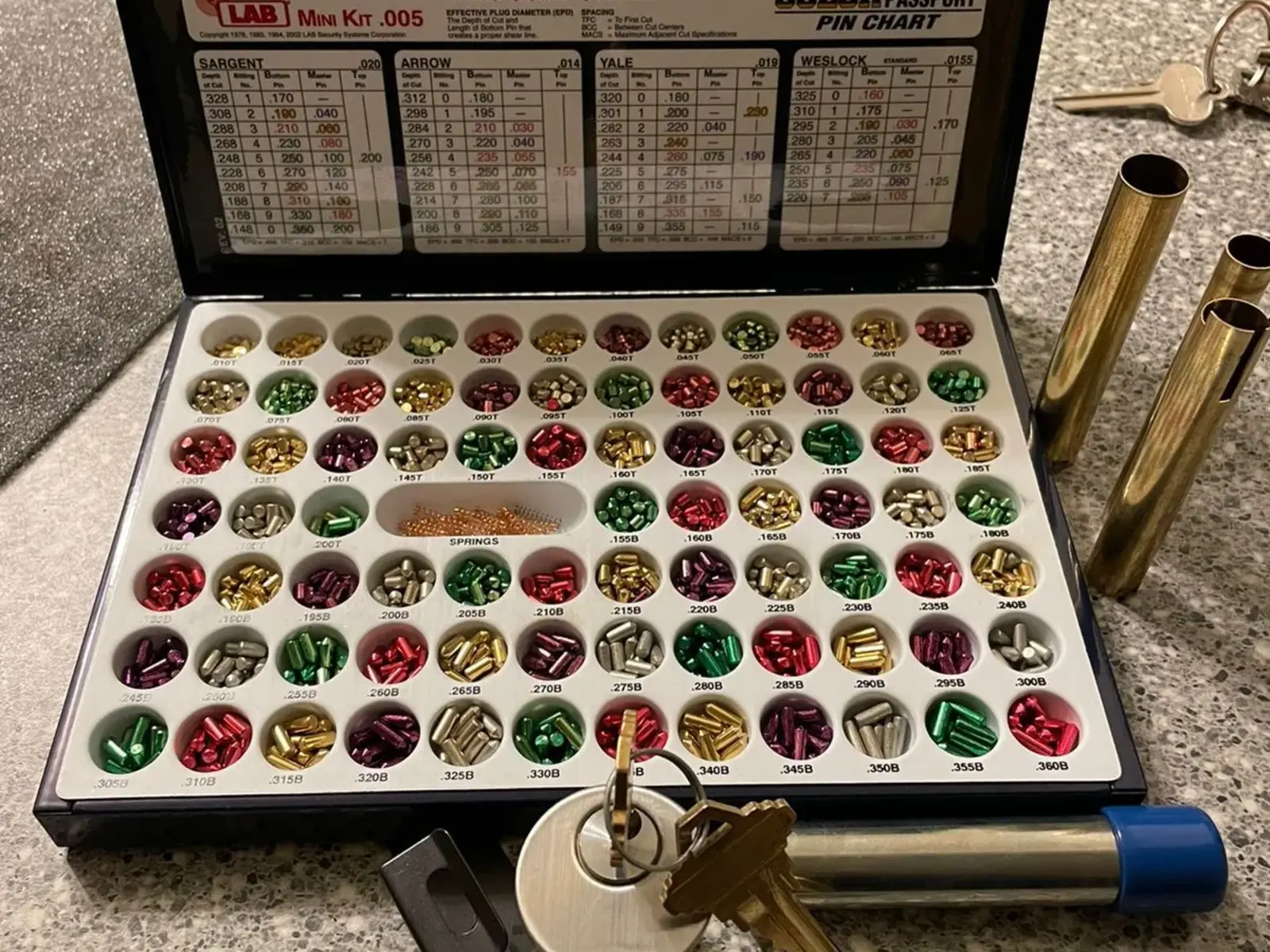
A pin-tumbler cylinder holds a row of small spring-loaded pins. Your key's cuts lift each pin to exactly the right height, and the cylinder turns. Rekeying means taking the cylinder apart, replacing those pins with a new set matched to a new key, and putting it back. The deadbolt, the knob, the door prep and the finish all stay where they are.
That is why lock rekeying costs less than a lock change: you pay for labor and a few pins, not new hardware. It is also why rekeying only works when the cylinder is the kind that can be opened and re-pinned. If you are still deciding between the two jobs, the rekey or replace guide walks through that choice. This post is about the step before it: whether rekeying is even on the table.
Locks that rekey without any fuss
These cover most of what we see on NYC doors.
Standard deadbolts, knobs and levers. Residential and light commercial locks from the big brands use pin-tumbler cylinders built to be re-pinned. A knob and deadbolt on the same apartment door is the classic rekey job.
Mortise cylinders. Pre-war buildings are full of mortise locks, the rectangular case set into the edge of the door. The lock body can be decades old, but the cylinder that threads into it is a standard part, and it rekeys like any other. When a mortise lock gives trouble, the cylinder is often fine and the case is the problem, which the pre-war mortise lock guide covers.
Rim cylinders. The round cylinder on the outside of a surface-mounted rim lock or a police lock is a pin-tumbler cylinder too. It comes out from the inside of the door and rekeys on the bench.
Padlocks with removable cylinders. Some better padlocks are built to be rekeyed. Most cheap ones are not, which brings us to the harder cases.
Locks that rekey, with conditions
Kwikset SmartKey. These locks are built to be rekeyed without taking the cylinder apart, and Kwikset is plain about the catch: the process "requires the current working key and the SmartKey Security tool," and "only someone with both of those items can rekey your lock." Lose the working key and Kwikset's own advice is to call a locksmith. Two more limits from Kwikset's documentation: a SmartKey cylinder cannot be master-keyed, and the tool works only on SmartKey cylinders, not on other brands.
Keyed smart locks. A smart deadbolt with a key override still has a mechanical cylinder, and that cylinder is what gets rekeyed. Schlage says its locks with a cylinder, "whether a mechanical lock or smart lock, can be keyed alike or rekeyed," and its Encode deadbolts use a standard 5-pin C keyway cylinder. Yale's route for the Assure Lock 2 is a replacement cylinder, which Yale sells in Schlage and Kwikset keyways, so it can be matched to the rest of your keys. Keyless smart locks have nothing to rekey. You change the codes and remove old users in the app instead, which is the smart-lock version of a rekey and costs nothing but ten minutes.
High-security cylinders. Medeco, Mul-T-Lock and similar restricted systems can be rekeyed, with parts specific to each system, but their keys are the controlled part. Medeco says its keys are patent-protected and "only available from authorized Medeco dealers," and Mul-T-Lock's key card system requires an authorized locksmith to present the card before more keys are cut. A rekey ends with new keys, so in practice it runs through a dealer for that keyway. That control is the point of buying them. If you own one, keep the key card or registration paperwork; without it, getting keys can mean replacing the cylinder. The high-security lock guide explains how the key control works.
Master-keyed systems. In a building with a master key, each cylinder is pinned to work with both its own key and the master. It can be rekeyed, but only within the system's pinning chart, or the master stops working. Whoever holds the chart, usually the building's locksmith, should do the work.
Interchangeable core locks. Some offices and schools use locks whose core slides out with a special control key. These are not re-pinned on the door. The old core comes out and a new core goes in, which is faster and needs the control key.
Locks that usually cannot be rekeyed
Wafer locks. Mailboxes, desk drawers, filing cabinets and many cheap cabinet locks use flat wafers rather than pins. Some can be reworked, but replacing the lock is usually faster and cheaper. Apartment mailbox locks are the common case, and mailbox lock replacement starts at $95.
Sealed budget locksets. Some low-cost imported locks use cylinders that are crimped or sealed shut, with no practical way to open them and change the pins. The hardware is cheap enough that it is replaced instead.
Warded locks. Old skeleton-key locks on interior doors and antique furniture have no pins to change. They are replaced, or simply left as the decorative locks they now are.
Electronic-only locks. No cylinder, no rekey. Reset the codes, delete old fobs or users, and the job is done.
How to tell what you have, from the outside
You can usually narrow it down before anyone visits.
- Look at the key. The brand stamped on the bow often names the lock. A plain brass key with a jagged edge is almost always pin-tumbler. A key with angled cuts, dimples, or a brand like Medeco or Mul-T-Lock points to a restricted system.
- Look at the face of the lock. A small hole beside the keyway marks a Kwikset SmartKey cylinder; that hole is where the rekeying tool goes. A keypad or a fingerprint reader means a smart lock, and the question becomes whether it also has a keyhole.
- Count the locks and the brands. Three doors with three different brands can all be rekeyed, but not necessarily to one key, which matters if one key is what you want.
- Photograph it. A clear photo of the lock face and the edge of the door tells a locksmith most of what they need. Do not photograph the cut edge of your key and post it anywhere. A clear, flat photo of a key's cuts can be enough to read it.
Rekeying to one key across different locks
Everyone asks for this, and it is often possible. Locks that share a keyway can be pinned to the same key. Locks with different keyways cannot, because the key physically will not enter both. The usual fix is to replace the one odd cylinder, or convert it to the shared keyway, and rekey the rest. The keyed-alike guide covers the details, including what a single key means for a building with a super who also needs access.
What it costs, by answer
These are the ranges we publish. The final number is confirmed once the technician sees the locks.
| Situation | Typical NYC price |
|---|---|
| Rekey, standard door (knob and deadbolt) | $85 to $150 per door |
| Lock cannot be rekeyed, replace it | $125 to $450 per opening |
| High-security cylinder, new | $225 to $500 per opening |
| Mailbox lock replacement | From $95 |
The service call is separate and depends on the hour: $60 from 8 a.m. to 6 p.m., $90 from 6 p.m. to 10 p.m., and $125 from 10 p.m. to 8 a.m. Several doors on one visit share one service call, so a house with three rekeyable doors lands at $255 to $450 plus a single visit fee. The rekey cost breakdown has more worked examples.
Rentals and co-ops: whose lock is it
Whether a lock can be rekeyed is a hardware question. Whether you may rekey it is a different one. In a rental, the primary lock on the apartment door belongs to the owner, and the rules on what a tenant may add or change are in the post on whether a tenant can change the locks. Co-ops often require the super or managing agent to hold a working key. Check before the cylinder comes out, not after.
Frequently Asked Questions
Can any lock be rekeyed? Most door locks can, because most use pin-tumbler cylinders. The exceptions are wafer locks such as mailboxes, sealed budget locks, old warded locks and electronic-only locks, which are replaced or reprogrammed instead.
Can you rekey a lock without the original key? Usually yes. With a working key the cylinder comes apart quickly. Without one, the locksmith has to open or remove the cylinder first, which adds labor. Kwikset SmartKey locks are the notable case where losing the working key turns a quick tool-based rekey into a full cylinder job.
Can you rekey a smart lock? If it has a keyhole, the mechanical cylinder behind it can usually be rekeyed like any other. If it is keyless, there is nothing to rekey; you change the codes and remove old users instead.
Can a Kwikset and a Schlage lock be keyed to the same key? Not in their standard keyways, because a Kwikset key will not enter a Schlage keyway. One cylinder has to be replaced or converted to match the other, and then both can be pinned to one key. Some Kwikset SmartKey locks are sold in the Schlage SC1 keyway, which settles it at purchase.
How long does a rekey take? A standard cylinder takes minutes. A typical apartment door with a knob and a deadbolt is well under an hour, including cutting and testing the new keys.
Need Expert Help?
If you have questions about any of the security solutions discussed in this article, our team is ready to provide expert guidance.
Call us at (844) 912-1908 for a free consultation or to schedule a service.