Can a Tenant Change the Locks in NYC? Your Legal Rights
Yes. If you rent an apartment in a New York City building with three or more units, you have a legal right to install your own lock on your apartment door. You do not need your landlord's permission. You do not have to ask nicely. The right is written into state law, and any lease clause that charges you for it is void.
That is the short version. The details matter, because the right comes with two conditions and one important limit on which buildings it covers.
What Multiple Dwelling Law § 51-c actually says
The relevant law is New York State Multiple Dwelling Law § 51-c, titled "Rights of tenants to install and maintain locks in certain entrance doors." The operative language:
Every tenant of a multiple dwelling shall have the right to install and maintain a lock, separate and apart from any lock installed by the owner, not more than three inches in circumference, provided that a duplicate key to such lock shall be supplied to the landlord or his agent upon his request.
Read that carefully, because two things in it surprise most tenants.
First, the right is to install a lock separate and apart from the landlord's lock. This is not a right to rip out the existing cylinder. It is a right to add your own, in addition to whatever the owner installed.
Second, the right exists on its own. There is no application, no approval step, and no notice period written into the statute.
The three-inch rule, and what it means in practice
Three inches in circumference is the one hard number in the law, and it is smaller than people assume. Circumference is the distance around the lock, not across it. Three inches around works out to a face slightly under one inch across.
In practice that describes the small auxiliary locks New Yorkers have been putting on apartment doors for decades. A slide bolt. A chain guard. A compact surface-mounted deadbolt. It does not describe a full replacement mortise cylinder or a wide decorative escutcheon.
If you want a bigger lock, or you want to change the primary lock rather than add to it, you are outside § 51-c and back to needing the owner's agreement. That is a normal conversation to have, and most NYC landlords say yes to a rekey. It is simply not a conversation the statute wins for you.
The duplicate key your landlord can ask for
The condition attached to the right is straightforward. If the landlord or their agent asks for a duplicate key to your added lock, you have to supply one.
Note the trigger. The obligation is "upon his request." You are not required to hand over a key before anyone asks. But when the request comes, the answer is yes, and refusing puts you outside the protection the statute gives you.
Landlords need access for repairs, inspections, and genuine emergencies. A lock the owner cannot open in a fire or a flood is a real problem, and the duplicate key requirement is the trade the law makes for handing tenants the right in the first place.
If you are worried about a landlord entering without cause, the key is not your remedy. Illegal entry and illegal lockouts are a separate issue with separate law, and we cover that in what the law says when your landlord locks you out.
What your lease cannot do
This is the part worth knowing before you sign anything.
Some NYC leases contain a clause charging a fee for the privilege of adding a lock, or a rider requiring written permission first. Section 51-c addresses that directly. A lease provision requiring payment of:
additional rent, bonus, fee or other charge or any other thing of value for the right or privilege of installing and/or maintaining any such lock, shall be deemed to be void as against public policy and wholly unenforceable.
"Void as against public policy and wholly unenforceable" is strong statutory language. It does not mean the clause is negotiable. It means the clause has no legal effect at all, whether or not you initialed it.
You still owe the duplicate key. You do not owe a fee for the right.
What your landlord already owes you
Separately from anything you install, the owner has obligations of their own under NYC Housing Maintenance Code § 27-2043. The owner must provide a key lock on the entrance door to each unit, plus at least one key.
In a class A multiple dwelling, which is the ordinary permanent-residence apartment building, that door must also have a heavy duty latch set and a heavy duty deadbolt. The deadbolt has to be operable by key from the outside and by thumb-turn from the inside.
If your apartment door does not have a working deadbolt, that is the owner's problem to fix, not yours to solve out of pocket. Worth checking before you spend your own money adding hardware.
Where this does not apply
Multiple Dwelling Law applies to multiple dwellings, and § 4 of the same law defines that term precisely:
a dwelling which is either rented, leased, let or hired out, to be occupied, or is occupied as the residence or home of three or more families living independently of each other.
Three or more families. That threshold does real work in New York City, where a great deal of the housing stock in Queens, Brooklyn, and Staten Island is one- and two-family. If you rent the top floor of a two-family house in Astoria or Bay Ridge, § 51-c does not cover you, and your lock question is governed by your lease.
Class A covers permanent residence, which the statute defines as occupancy by the same person or family for thirty consecutive days or longer. Short-stay and transient buildings fall under class B and follow different rules.
Rekey or replace, and what it costs
Once you know what you are allowed to do, the practical question is which job you actually need.
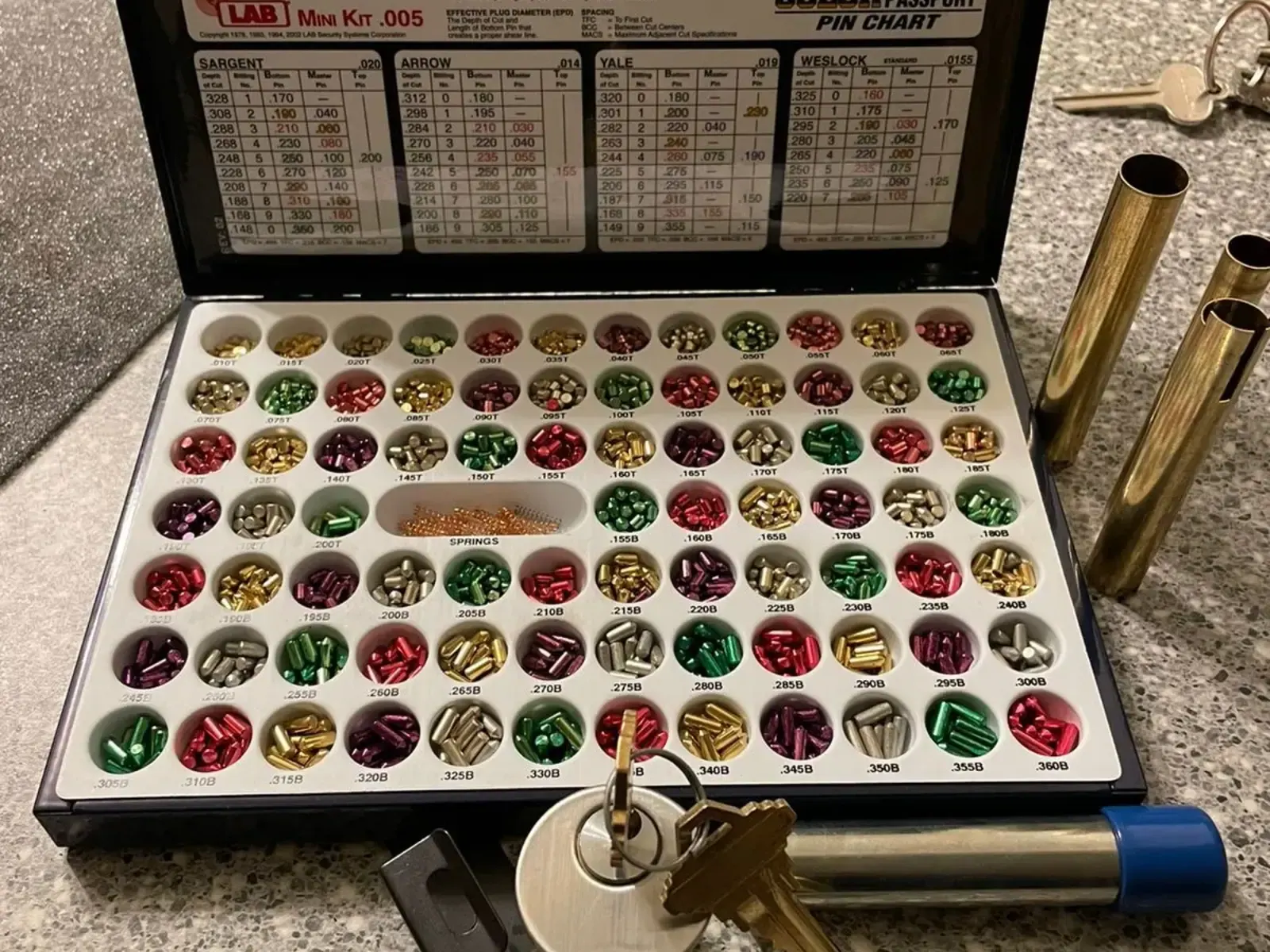
Rekeying keeps the hardware on your door and changes the internal pins so old keys stop working. It is the right answer whenever the existing lock is sound, which it usually is. SWIFTLOCKSMITH prices rekeying from $85 per door. A typical NYC apartment with a knob and a deadbolt runs $85–$150 in total.
Replacing means new hardware. That is the answer when the lock is worn, damaged, builder-grade, or when you want to move up to a high-security cylinder. A standard grade-2 deadbolt starts around $150 installed. High-security cylinders such as Medeco Maxum, Mul-T-Lock MT5+, and Schlage Primus are quoted on site, because they use restricted key blanks that cannot be copied without your authorization.
Both stop every old key from working the moment the job is finished. The only difference is whether you are also paying for new hardware. Full detail on both is on our lock change and rekeying page, and the restricted-key options are on our high-security locks page.
If you just signed a lease, the move-in case has its own guide: moving into a NYC apartment.
Co-ops and condos are a different question
If you own rather than rent, § 51-c is not your law. Co-op shareholders answer to a proprietary lease and a board, and many buildings require key escrow with the managing agent. Condo owners generally have more latitude, subject to the bylaws.
The practical difference is that a co-op board can impose conditions a landlord cannot impose on a tenant. Check your alteration agreement before you change a primary lock.
Related reading. Whether your landlord is entitled to a key is covered in does your NYC landlord get a key to your apartment.
Frequently Asked Questions
Can my landlord charge me a fee to add a lock? No. Multiple Dwelling Law § 51-c makes any lease provision demanding "additional rent, bonus, fee or other charge" for that right void as against public policy and wholly unenforceable. The clause has no effect even if you signed it.
Do I have to give my landlord a key to the lock I installed? Yes, on request. The statute conditions the right on supplying a duplicate key to the landlord or their agent when asked. You are not required to hand one over before a request is made.
Can I replace the landlord's lock instead of adding my own? Not under § 51-c. The statute covers a lock "separate and apart from any lock installed by the owner." Changing the primary lock is outside the statute and needs the owner's agreement, which most NYC landlords give for a routine rekey.
Does this apply to a two-family house? No. Multiple Dwelling Law § 4 defines a multiple dwelling as housing three or more families living independently. One- and two-family homes fall outside it, and your lease governs instead.
What if my apartment door has no deadbolt at all? That is the owner's obligation, not yours. NYC Housing Maintenance Code § 27-2043 requires a heavy duty latch set and a heavy duty deadbolt on dwelling unit doors in class A multiple dwellings. Ask the owner to correct it before spending your own money.
How fast can a locksmith do this? A standard apartment rekey takes under an hour per lock. SWIFTLOCKSMITH runs same-day mobile service seven days a week across all five boroughs.
Need Expert Help?
If you have questions about any of the security solutions discussed in this article, our team is ready to provide expert guidance.
Call us at (844) 912-1908 for a free consultation or to schedule a service.