Storefront Gates and Locks in NYC: Rules, Repairs, Costs
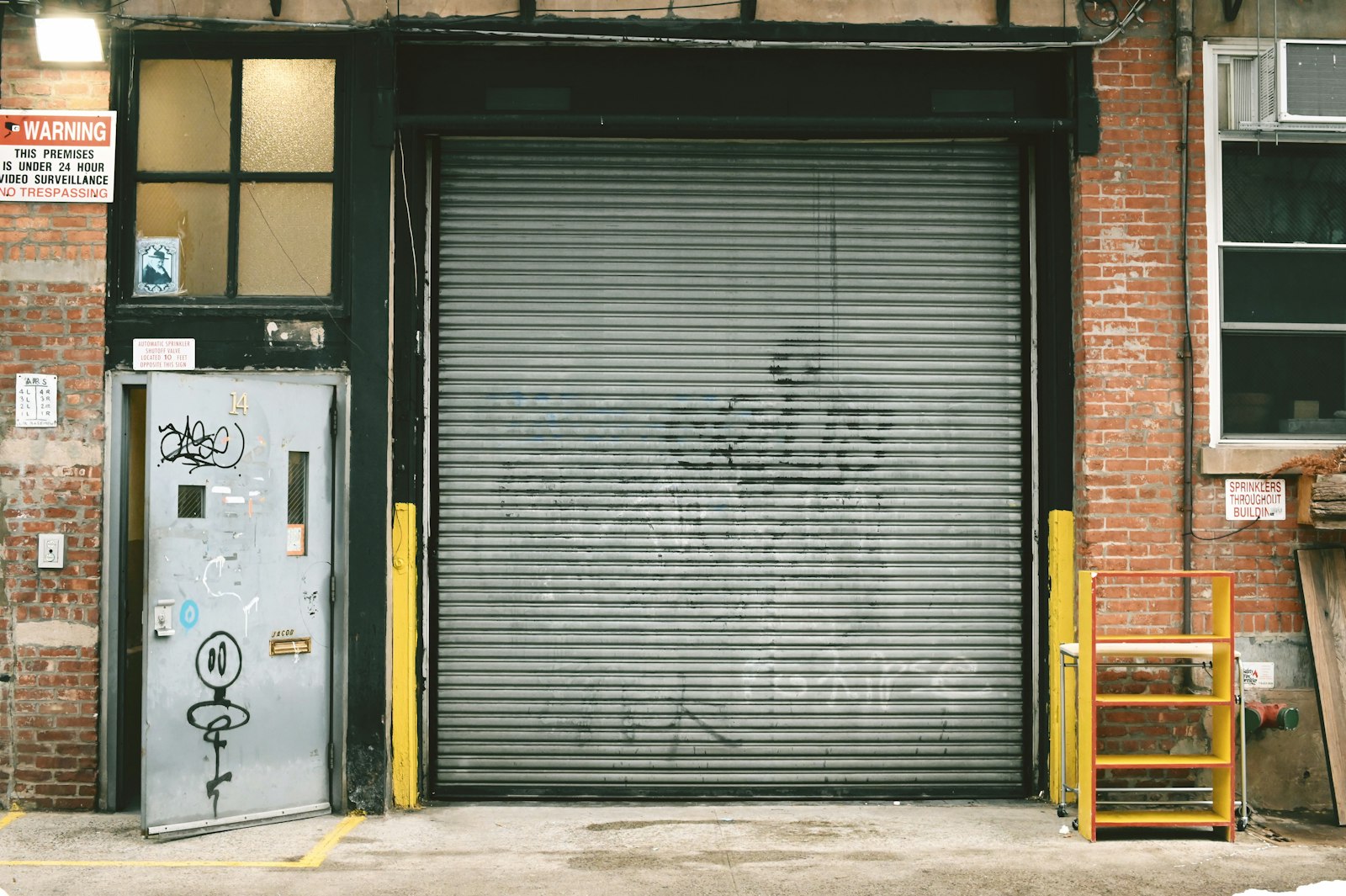
A NYC storefront’s security is four layers working together: the roll-down gate, the gate’s locks, the door’s hardware, and the cylinders that decide who holds keys. This year the gate layer comes with a legal deadline attached: under Local Law 75 of 2009, security gates installed or replaced since July 1, 2011 were required to be at least 70 percent open or transparent when closed by July 1, 2026, and the Department of Buildings began enforcing that standard this summer. If your gate is solid steel, the gate conversation now runs ahead of the lock conversation.
That is the short version. Here is the law as it stands, the hardware that locks a gate properly, what the storefront door itself needs, and the key-control routine that outlasts any single employee.
The gate law, in plain terms
The 2009 law was written for visibility: police and firefighters responding at 3 a.m. want to see into the store, and open-style gates collect less graffiti. What it requires, per the Department of Buildings’ guidance:
- Gates on commercial storefronts (business and mercantile occupancies) must permit at least 70 percent visibility of the storefront when closed.
- New installations have had to comply since July 1, 2011.
- Gates installed or replaced on or after July 1, 2011 had until July 1, 2026 to meet the standard.
Two practical notes. First, enforcement and possible amendments were still moving through the Council as the deadline arrived, so before spending on a full gate replacement, check the Department of Buildings’ current guidance for your situation. Second, when a solid gate does get replaced with an open-mesh model, the locking hardware does not carry over one-for-one; plan the locks with the gate, not after it.
We are locksmiths, so our lane is precise here: we install, repair, and rekey the locks and cylinders on gates; fabricating or motorizing the gate curtain itself is gate-company work. What we will not do is shrug when the two trades point at each other, because the lock is only as good as the gate it bolts to.
How a roll-down gate actually locks
Most manual gates lock at the bottom bar, and the hardware menu is short:
- Slide-bolt locks on the bottom bar, throwing into the side channels, secured with padlocks or built-in cylinders. One on each side, always; a gate pinned on one side twists.
- Ground pins and hasps set into the sidewalk slab, catching the bottom bar. Simple and strong when the slab anchor is sound, wobbly theater when it is not.
- Padlocks, where the choice does the real work. The NYC standard is the shielded “hockey-puck” padlock: no exposed shackle for bolt cutters to bite. A $12 long-shackle padlock on a $2,000 gate is an invitation with a receipt.
- Cylinder gate locks, which put a keyed cylinder into the slide bolt itself, cleaner than padlocks and rekeyable like any other cylinder in the store.
Motorized gates move the locking into the operator, plus a manual backup lock for outages. The recurring failure we see is not the motor; it is the neglected manual lock nobody has turned in two years, discovered seized at closing time.
The storefront door is its own project
The glass-and-aluminum door behind the gate carries the daytime security, and it uses hardware most residential advice never mentions:
- Narrow-stile deadlatches and hookbolts. The thin aluminum frame takes purpose-made hardware; a hookbolt deadbolt grabs the jamb in a way a straight bolt cannot, which matters on flexible aluminum frames.
- Panic hardware where occupancy requires it. When the store is open, the exit must open from inside with one motion, no key, no knowledge. Egress is life-safety law and it is absolute; any lock plan that traps an occupied store fails before it starts.
- The cylinder decides everything else. Storefront cylinders are standardized and swap cleanly, which means upgrades to restricted keyways are usually a cylinder job, not a door job.
A worn deadlatch that needs a lift-and-jiggle at closing is not a quirk; it is a failure in progress, and it always completes its failure after hours. Door hardware service runs through our commercial services, with Manhattan storefronts specifically handled through the commercial locksmith Manhattan side, including the Financial District’s after-hours office corridor.
Key control: the layer that outlasts employees
Storefront security fails through keys more often than through steel. The routine that fixes it:
- Rekey on turnover. When a keyholder leaves on anything but great terms, the cylinders get rekeyed. At our published $85–$150 rekey rate, it is the cheapest insurance in retail.
- Restrict the keyway where copies worry you. Standard keys copy anywhere for pocket change. A restricted-keyway cylinder makes every duplicate an authorized event; the mechanics are in our high-security key duplication explainer.
- One hierarchy, on purpose. Manager key opens everything, staff key opens the front door only, cash room stands alone. That is a small master key system, and designing it beats accumulating it.
- Cameras confirm what keys did. Entry hardware plus storefront CCTV reads as one story when something goes wrong, and multi-location operators should fold both into the portfolio routine from our property manager playbook.
The opening-and-closing routine that prevents most calls
The after-hours storefront emergencies we run are overwhelmingly failures of maintenance, not attacks, and the prevention routine fits on an index card:
- Quarterly, lubricate every gate lock and padlock with a dry PTFE or graphite product, not household oil, which gums up and collects grit. A slide bolt that needs a hip check in October seizes entirely by January.
- Monthly, run the manual override on a motorized gate. Discovering the manual lock is seized during a power outage, at closing, in the rain, is the classic call. Two minutes on the first of the month retires it.
- Test the spare keys, then store them off-site. The spare padlock key taped inside the register drawer protects against exactly nothing that matters. A labeled spare set at the owner’s home or a second location does.
- Watch the bottom bar. Bent bottom bars and crushed channel guides make locks miss their keepers, and staff respond by slamming harder, which finishes the job. A bar that no longer glides is a service call while it is still cheap.
- Retire padlocks on a schedule. Outdoor padlocks are consumables. Swap them every few years before the shackle spring quits at 11 p.m. on a Sunday.
What storefront lock work costs
Published ranges, quoted all-in before dispatch: rekeying $85–$150; lock installation and repair $125–$450 per opening depending on hardware; gate-lock and cylinder work quoted by the job on the phone since gate hardware varies widely. Service calls follow our standard structure ($65 business hours, $125 evenings, $195 late night) and the number quoted is the number invoiced. For the pattern where a “$65 storefront lockout” becomes a $700 cash demand, our scam guide is the vaccination.
For gate locks, storefront hardware, rekeys, or a key-control redesign anywhere in the five boroughs: (844) 912-1908.
Frequently Asked Questions
Is my solid roll-down gate illegal now? If it was installed or replaced on or after July 1, 2011 on a commercial storefront, the 70 percent visibility standard applied to it as of July 1, 2026 under Local Law 75. Enforcement details and possible amendments were still in motion this year, so verify your gate’s status with the Department of Buildings before committing to a replacement.
What is the best lock for a roll-down gate? Shielded hockey-puck padlocks or keyed cylinder slide-bolt locks, on both sides of the bottom bar, into sound anchors. The shackle a bolt cutter cannot reach is the entire design principle.
Do you repair the gates themselves? We service the locking hardware: slide bolts, cylinders, padlock points, and the manual locks on motorized gates. The curtain, springs, and motor belong to a gate company, and we will say so plainly rather than bill for adjacency.
Should the store’s locks be rekeyed when a manager leaves? Yes, same week. A storefront’s real key count is always higher than the drawer suggests. Rekeying is $85–$150 and turns every outstanding copy into a souvenir.
Can the same key open the gate, the door, and the office? With planned keying, yes, one key for the owner while staff keys stay limited. That is a small master-key hierarchy, and setting it up deliberately is a single visit.
Need Expert Help?
If you have questions about any of the security solutions discussed in this article, our team is ready to provide expert guidance.
Call us at (844) 912-1908 for a free consultation or to schedule a service.