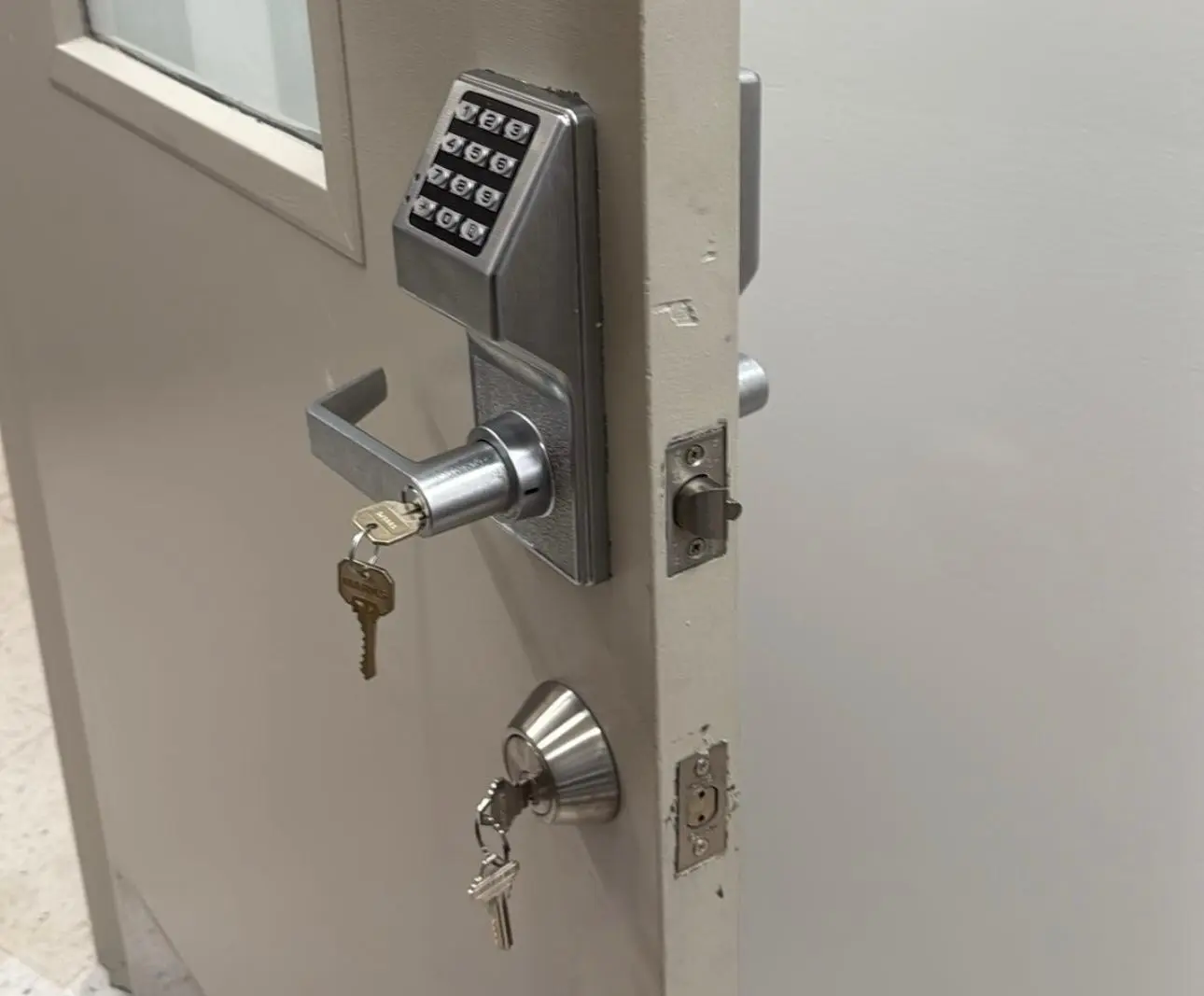
Lost Your NYC Apartment Building Key Fob? What to Do First
If you lose the key fob to your NYC apartment building, tell management the same day and ask them to deactivate it. A lost fob keeps opening the front door until someone turns it off, and it often carries a clue to your address.
This post covers the order to do things in, why a fob is not always copyable, what a replacement involves, and when a lost fob is also a reason to rekey the apartment lock.
Do this first: deactivate it
The fob is a credential, not a key. It opens the door because the building's system recognizes its number, and the system keeps recognizing it until the building removes it.
Call or email the super, the managing agent or the property manager, and ask for two things: deactivate the lost fob, and issue a replacement. The first matters more than the second, because the risk is someone else using it. Ask when the deactivation takes effect and get that in writing, an email is enough. If you cannot reach management after hours, leave a message and follow up in the morning.
Do this before anything else, even before looking for the fob one more time. A fob that turns up tomorrow can always be reactivated, and one that is found by someone else tonight cannot be taken back.
The fob and the apartment key
Check what else was on the ring. If the fob was attached to your apartment key, a mailbox key or anything with your address on it, the loss is bigger than the fob.
The risk is that a stranger now holds both a way into the building and a way into your door, and the lock on your door does not know the difference between you and them. If the apartment key was on the ring, rekey the apartment lock the same day. Rekeying starts at $85 for a standard door, and a knob and deadbolt run $85 to $150 all in, which is the proportionate response. The first-hour checklist for this is in stolen or lost keys in NYC.
If only the fob was lost and nothing identified your apartment, deactivating it is usually enough.
Why you can't always get a copy
Building fobs are not all the same technology, and the difference decides whether a copy is possible.
Older proximity fobs on the 125 kHz standard send their ID with no encryption, so a nearby reader can capture it and write it to a blank, and a cloner costs very little. Newer credentials, such as the HID Seos family, encrypt the exchange with AES, and researchers have found no practical way to clone the card itself. There is one caveat: a security researcher's 2023 analysis found that many readers can still be set to accept the older 125 kHz format, which weakens the newer card if the building never turned that fallback off.
What that means for you is practical. A fob on the old standard can be duplicated, and a fob on the newer one generally cannot, and in both cases the building decides whether a duplicate is allowed.
Why the building has to be involved
A copy of a fob is not like a copy of a key, because the building needs to know it exists. Management tracks how many credentials are in circulation and which unit each belongs to, which is how they remove a lost one and spot misuse.
A duplicate cut outside that process puts a credential into the system that management does not know about, and it can also breach the house rules. For that reason we do not copy a building fob without the managing agent's authorization, the same approach we take with mailbox locks, where the rule is get authority first, as covered in mailbox lock replacement in NYC. If you need a spare, the clean route is to ask management to issue one.
What a replacement costs
The fee for a replacement is set by the building, not by a locksmith, and it varies from free to a fixed charge. Ask management for the amount before you ask for the fob.
If the building charges more than you expect, ask whether the fee is in your lease or house rules, and ask for the deactivation separately from the replacement, since the deactivation protects the building and the owner has a stake in doing it. What we can quote is the lock work around them.
When the fob is not the problem
A fob that does not work is not always a lost fob. If the door still will not open, the reader or the electric strike may have failed, and that is the owner's repair. The front door has to keep working for everyone, as laid out in what to do about a broken front door lock in an NYC building.
If the door opens but does not latch or lock behind you, that is a hardware failure, not a credential failure, and it should be reported the same way. For buildings weighing a move from fobs to smart entry, buzzer and intercom systems versus smart entry for walk-ups compares them.
What property managers and owners can do
A building that issues fobs needs a list of who holds which one, a way to deactivate a single credential quickly, and a policy for lost fobs that tenants know about. Many of the complaints come from buildings that have none of the three.
Access control systems for NYC buildings covers the options, our access control systems page covers the system side, and our commercial services page lists the door hardware we work on. Turning off legacy credential formats on the readers, where the system allows it, closes the downgrade weakness described above.
A checklist, in order
Work through these in sequence, and stop when you reach the one that applies.
- Tell management the same day, in writing, and ask for deactivation.
- Ask when the deactivation takes effect, and get that in an email.
- Check what else was on the ring. If it held your apartment key or anything with your address, book a rekey.
- Ask management what a replacement costs and how many you are entitled to.
- If the fob turns up, ask management whether it can be reactivated or whether the old one stays retired.
The order matters because the first two steps close the door, and the rest are about money and convenience.
How the fob fits with the front door law
A fob is how residents release a lock that the law already requires. Under Multiple Dwelling Law §50-a, a building put up after 1968 must have an automatic self-closing, self-locking entrance door, kept locked unless an attendant is on duty. The fob, the buzzer and the intercom are ways of opening it.
That also sets a limit on what the building can do with the hardware. The Buildings Department's rule, 1 RCNY §42-01, says a self-locking door must open from the inside without a key. A fob reader on the outside does not change that. If a reader fails and the door will not release, or the door fails to lock at all, that is the owner's repair, covered in what to do about a broken front door lock in an NYC building.
What to ask for at move-in
Most fob problems are cheaper to solve before they happen. When you move in, ask how many fobs come with the unit and what a spare costs, how a lost one is handled and how fast it can be deactivated, and whether the readers still accept older credential formats. The last question is the one most tenants never think to ask, and the answer tells you how much the card in your pocket is actually worth.
If your building also has a package room or a garage that uses the same credential, ask whether deactivation covers all of them at once, because a fob that is off at the front door but still live on the side door has only been half retired.
Frequently Asked Questions
What should I do if I lose my apartment building key fob? Tell management the same day and ask them to deactivate it, then request a replacement. Until it is deactivated, whoever finds it can open the front door.
Can a locksmith copy my building key fob? Sometimes, depending on the technology, but only with the managing agent's authorization. Older 125 kHz fobs can be duplicated. Newer encrypted fobs generally cannot, and the building controls whether a duplicate is allowed.
How much does it cost to replace an apartment key fob? The building sets the fee and it varies, from nothing to a fixed charge. Ask management for the amount in writing before requesting the replacement.
Should I rekey my lock if I lose my building fob? If the fob was on the same ring as your apartment key, or anything with your address on it, yes. If only the fob was lost, deactivating it is usually enough.
Is this the same as a car key fob? No. A car fob is programmed to one vehicle. A building fob is a credential in the building's access system. Car fob pricing is covered in key fob replacement and programming costs.
Need Expert Help?
If you have questions about any of the security solutions discussed in this article, our team is ready to provide expert guidance.
Call us at (844) 912-1908 for a free consultation or to schedule a service.