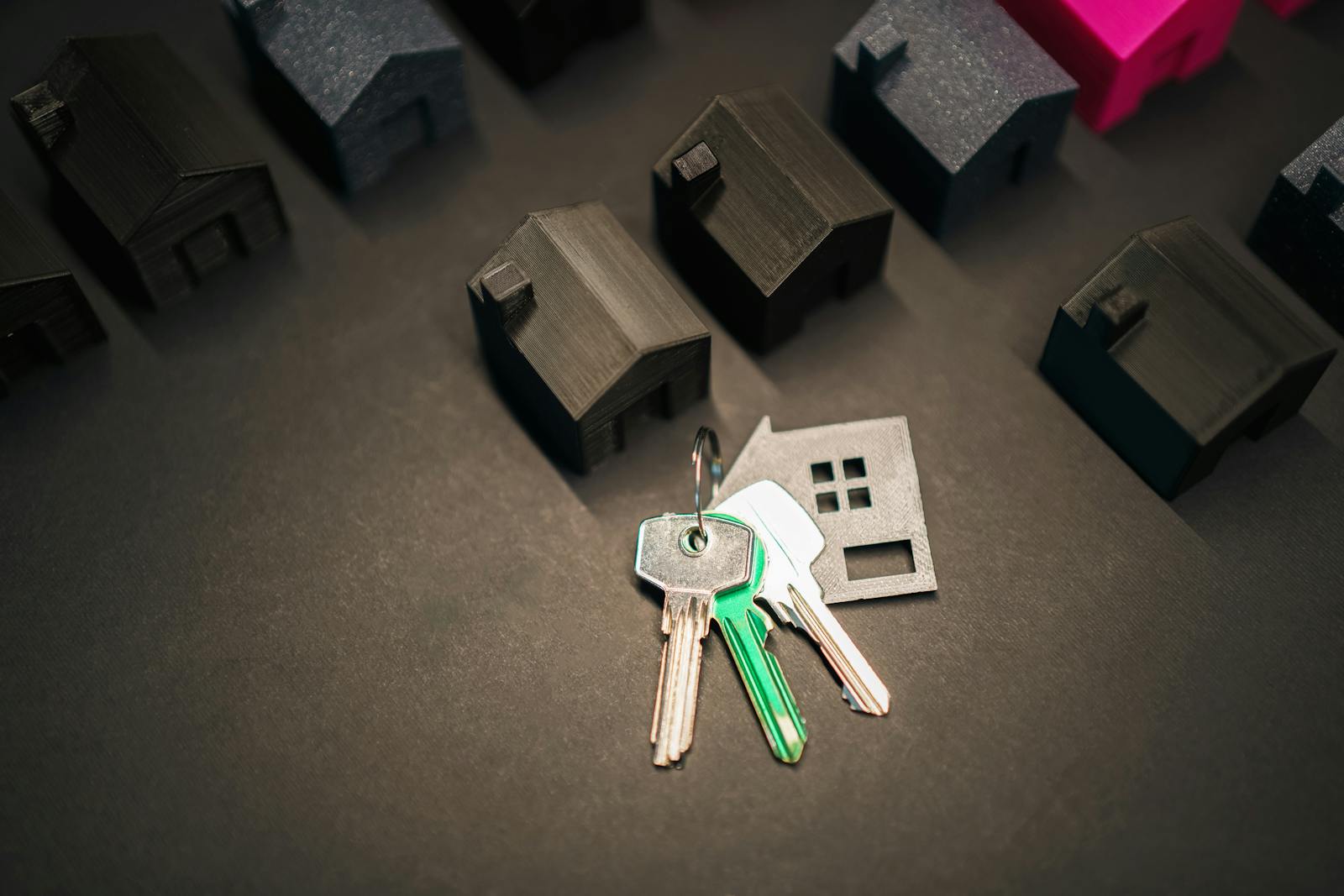
Stolen Keys in NYC: The 24-Hour Plan
You realize the keys are gone on the subway. Or the bag was lifted at a bar in Williamsburg. Or the gym locker was popped while you were on the treadmill. Either way, your apartment key, your office key, and your mailbox key are now in the pocket of a stranger who might know where you live, because the keys were on the same ring as your work badge with your name printed on it.
This is not a misplacement. It is a security event. Treat it that way and you spend $300 on rekeying. Treat it as "I'll just be more careful tonight" and you sleep next to an unsecured door.
Here is the 24-hour plan, in the order things should happen.
The first 30 minutes: assume the keys are findable to whoever has them
Before anything else, ask one question: was there anything on the keyring that ties the keys to your address? A fob from your building. An office badge. A car key with a vehicle parked outside your building. A loyalty card from the bodega on your corner. A train ticket. Any of these turns a random theft into a targeted one.
If yes, the threat level is high. You are not waiting until tomorrow morning to handle it. Skip ahead to "Rekey now, not in the morning."
If no (clean ring, just metal keys, no address-linked items), the risk is lower but not zero. The honest answer is that lost keys in NYC almost never get exploited for break-ins. The criminal economics are wrong. But the cost of being wrong is your apartment, so the calculus does not favor optimism.
Call the building super. Tell them clearly: "My keys were stolen, not lost." That phrasing matters. Some supers will rekey common locks (the front door buzzer system, the mailbox bank) on their own if a key with a building marking is gone. If you only say "lost," they will tell you to come pick up a spare. Use the word stolen.
NYPD report: yes, do it
Most New Yorkers skip the police report for stolen keys because it feels small. File it anyway. Three reasons:
- Insurance. Renters insurance and homeowners insurance both ask for a police report number when you file a claim for rekeying costs. Many policies cover lock replacement after theft (typically $250-$500). No report number, no payout.
- Pattern data. NYPD tracks key-theft as part of larceny reports. If your neighborhood has a pattern (a string of laundromat thefts, a pickpocket ring on a specific subway line), your report adds to the pattern that gets a beat cop assigned.
- Liability paper trail. If something does happen to your apartment in the next 60 days, the report establishes that you acted reasonably and promptly. That matters if there is any dispute with a landlord later.
File online at the NYPD's online reporting portal for theft under $1,000 with no suspect description. It takes about 10 minutes and you get a complaint number by email. Bring or save that number.
Rekey now, not in the morning
This is the part where people lose the most money to wrong decisions.
There are three options for the apartment door:
Option 1: Rekey the existing cylinder. The locksmith changes the pin configuration inside your current lock so the old key no longer works. You get a fresh set of keys cut to a new bitting. The lock itself stays. This is the right answer about 80% of the time. It is faster (20-30 minutes) and cheaper ($90-$160 depending on lock type) than full replacement.
Option 2: Replace the cylinder. If the lock is generic-brand (Kwikset, low-end Defiant, no-name big-box), or if it is older than about a decade, replacing the cylinder is the same labor as rekeying and gets you a fresh modern cylinder. Add about $40-$80 for the part.
Option 3: Upgrade to a restricted keyway. If the apartment is ground-floor, or there was anything on the keyring that links to your address, this is the call. Restricted-keyway cylinders (Medeco, Mul-T-Lock, Abloy) use key blanks that cannot be duplicated at a hardware store. Even if a key is found later, it cannot be copied. Cost is $250-$400 for the cylinder plus labor.
For more on the comparison, see our high-security locks NYC breakdown and the Medeco vs Mul-T-Lock post once it is live.
When you call, ask the locksmith two questions before they come:
- Are you DCWP-licensed? (NYC's Department of Consumer and Worker Protection licenses locksmiths. Verify on the DCWP license search.)
- What is the all-in price including service call, parts, labor, and tax?
If they will not give a number on the phone, hang up.
The rekey priority order (which doors first)
If you have multiple locks (apartment, building common door, mailbox, storage cage, garage), do them in this order:
- Apartment door first. This is the only one where a stranger with your key can be inside your home with you sleeping.
- Mailbox second. Identity theft starts in mailboxes. Bank statements, credit card offers, IRS letters. Mail theft is also a federal crime, which means a real paper trail.
- Building common door third. Most NYC buildings have multiple tenants and the building has a master key for emergencies. Talk to the super and the management company before you pay to rekey a common door. They may rekey it for the whole building on their schedule, or they may decline (and your individual rekey would not work because the master key still opens it).
- Storage cage / garage fourth. Low-priority unless you store something valuable there. A bicycle does not justify $150 of locksmith time at 11 PM.
The whole sequence usually fits inside one locksmith visit, billed as a single trip rather than separate calls.
Mistakes that cost the most
A few patterns that show up in the call log at SwiftLocksmith more often than they should:
- "I'll just change the lock myself with a Home Depot kit." Most apartment doors in NYC are metal-clad with reinforced strike plates and double-cylinder mortise locks that do not accept the residential deadbolt kits from a big-box store. The kit costs $80. The drilled-out door that does not close after you give up costs $800.
- Waiting for the building's preferred locksmith because they will be cheaper. They might be. They will also arrive Monday afternoon if the keys went missing Friday night. Time the lock is unsecured does not become a discount.
- Rekeying only the apartment because the mailbox feels like overkill. Mail theft is the part that escalates. By the time you notice an unauthorized credit card on your report, the damage has already happened.
- Skipping the locksmith and asking the super to "just give me a new key." A new key cut to the existing bitting does not change anything. The thief's key still works.
What this costs, honestly
A typical NYC stolen-keys callout for an apartment + mailbox rekey runs $180 to $380 all-in, depending on lock type and hour. Add about $200-$400 if you upgrade to a restricted-keyway cylinder. Add a $95 emergency surcharge if it is between midnight and 8 AM.
Renters insurance often covers $250-$500 of this. Some commercial leases require the building to cover rekeying for tenants. Ask before you assume you are on the hook.
Our standard breakdown for emergency lockout and rekey service in NYC is on the service page; the lock rekeying NYC page covers the non-emergency case.
When to call the building's management instead of a private locksmith
Three situations where the management company should pay, not you:
- The keys went missing because of a building issue. A broken mailroom door, a malfunctioning buzzer, a super who let someone in. Document with photos and put it in writing.
- A rent-stabilized lease where the lock was on the original inventory at move-in. New York housing law places lock maintenance on the landlord for rent-stabilized units in most cases. Check your lease and HPD violation history before paying out of pocket.
- A break-in or attempted break-in to the building, not your unit. If common-area security failed, the building is responsible for fixing what failed, not you.
In all three cases, document everything in writing, request reimbursement in writing, and keep the receipts. If the building drags, NYC HPD's online complaint portal is the next step.
What about smart locks?
A smart lock seems like the right answer here: a thief with the physical key gets no value because the lock no longer reads keys. True, but with caveats. Most NYC building doors are mortise-lock format and the smart-lock retrofit market for mortise is small and expensive. Smart locks also require either Wi-Fi or Bluetooth that works through the metal door, and the battery life on a heavily used apartment door is often shorter than advertised.
If you are going to upgrade, the question is which smart lock and where, which we covered in smart locks NYC and the smart locks for co-ops blog. The short version: smart locks make sense as an upgrade you planned anyway, not as a panic response to a stolen-keys event. For tonight, get the cylinder rekeyed. Plan the smart-lock upgrade for next month with proper installation.
Frequently asked questions
My keys were stolen but the thief does not know my address. Do I still need to rekey? Yes, if there was anything else on the keyring (fob, building marking, branded keychain). No, if it was bare metal keys with nothing else, but consider rekeying anyway because the cost of being wrong is your apartment.
Can I just change the locks myself with a kit from a hardware store? For a standard knob-and-deadbolt setup on a wood door, yes, if you are confident with a screwdriver. For NYC apartments with metal doors and mortise locks (which is most of them), no. The kits do not fit and you will end up with a door that does not close.
How fast can SwiftLocksmith get to my apartment for a stolen-keys emergency? Typical NYC arrival time is 12-25 minutes depending on borough and traffic. Manhattan and brownstone Brooklyn are usually under 20. Staten Island and outer Queens can be 30-45.
Will the building's super rekey for me? Sometimes, for common-door rekeys. Almost never for your apartment, because they would assume liability for the lock. A licensed locksmith with a paper trail is what insurance and the lease both want.
What if the keys turn up later? Bring them with you and ask the locksmith to either include them in the rekey paperwork or destroy them on site. Do not throw recovered keys in the trash. Some thieves count on people doing that.
Are rekey costs tax-deductible? For a primary residence, generally no. For a home office, the portion attributable to the office space may be deductible. For a business, fully deductible as a security expense. Ask your accountant.
My apartment is on the 6th floor. Do I really need a restricted keyway? The risk for a 6th-floor unit is much lower than for a ground floor or first floor. The reason to upgrade anyway is when you have a doorman building where keys get handed to deliveries, contractors, and dog walkers regularly. The restricted keyway prevents unauthorized duplication of those keys.
Need Expert Help?
If you have questions about any of the security solutions discussed in this article, our team is ready to provide expert guidance.
Call us at (844) 912-1908 for a free consultation or to schedule a service.