Lock Change After a NYC Lockout, and Who Pays For It
If the lock was opened because you lost your keys, the lock change is yours to pay for, and a rekey at $85 per door is almost always enough. If it was opened because it stopped working and you rent in a multiple dwelling, the repair belongs to the building's owner under NYC Administrative Code §27-2005, which requires the owner to keep the premises in good repair. If you own the unit, it is yours either way.
Three ways a NYC lockout ends, and why the bill lands differently
At 2 a.m. the only question is getting through the door, and a technician does that one of three ways.
A clean non-destructive opening leaves the door as it was this morning. A lock that was already failing, where the cylinder spun or the bolt would not retract, was a defect before it was a lockout. A drilled cylinder is what a high-security or seized lock gets.
Only the first leaves working hardware. The other two leave a hole that has to be filled tonight, and all three leave one question: how many keys to this door are not in your hand.
You lost the keys: rekeying is usually enough
A lost key is not a hardware failure. The lock is fine. What is not fine is that a key cut to your door is loose in the city, and if it sat on a ring with a fob or a piece of mail, it is loose with your address.
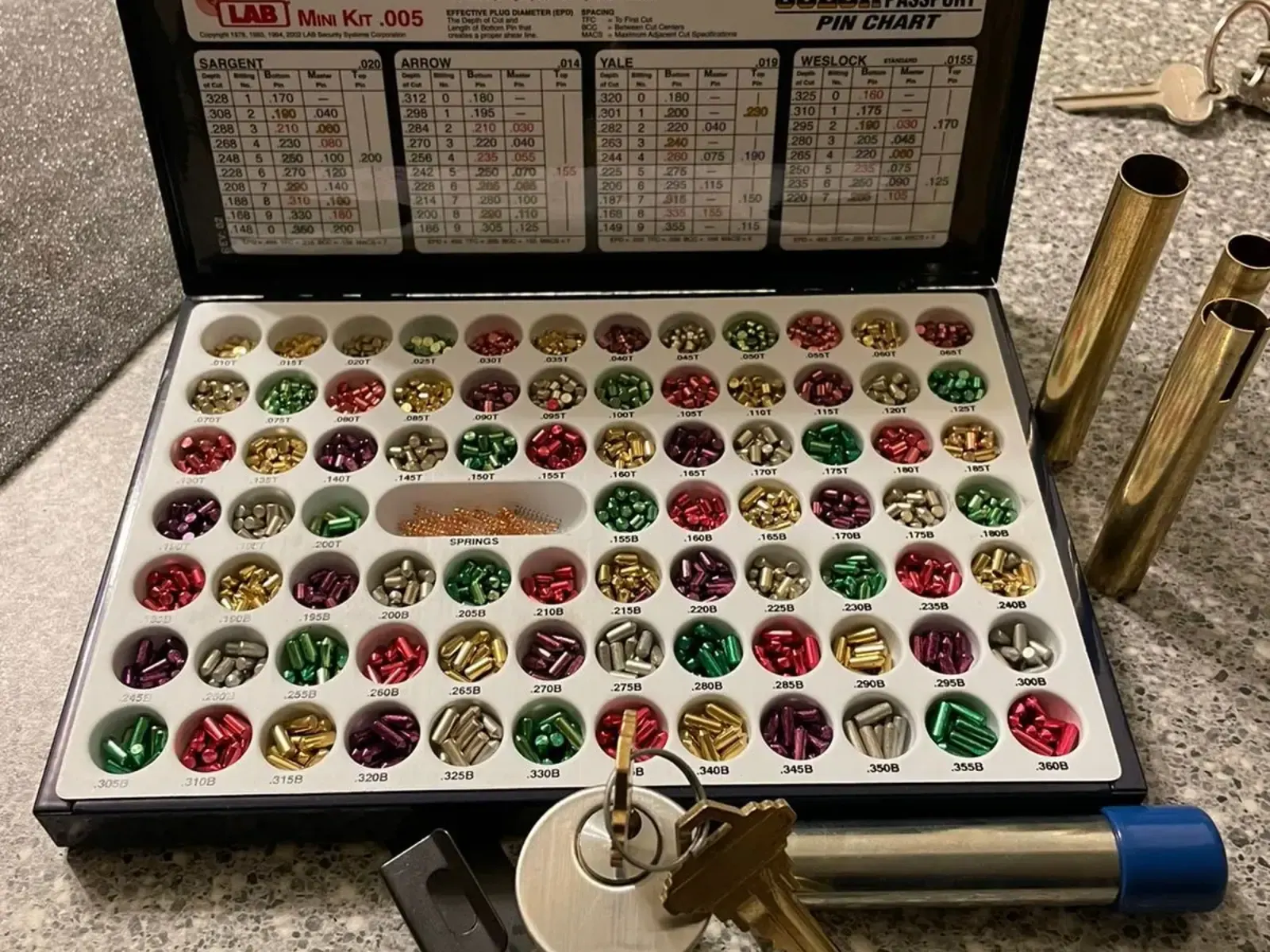
Rekeying re-pins the existing cylinder to a new bitting, and old keys stop turning the moment the technician finishes. It runs from $85 per door, and an apartment door with a knob and a deadbolt lands at $85 to $150, against a few hundred for new hardware doing the same job.
Replace instead of rekey only when the hardware is worn, damaged, builder-grade, or you want a restricted keyway a hardware store cannot copy. The full rekey-versus-replace comparison sits in its own post, since that choice does not turn on how the door got opened.
The lock failed: §27-2005 makes that the owner's repair
If you could not get in because the lock would not turn, you were locked out by a defective building component. In a multiple dwelling that is the owner's problem.
HPD writes exactly this violation and cites §27-2005 when it does. The wording on the notice is some variant of: PROPERLY REPAIR OR REPLACE THE BROKEN OR DEFECTIVE LOCK AT APARTMENT ENTRANCE DOOR. Inspectors type it a dozen ways, and the latch set and the strike turn up in the text too.
That is the same section that covers a leaking pipe or a dead boiler. §27-2043 is what HPD cites when the lock is missing rather than broken, and the two carry different urgency.
What HPD writes, and how fast it has to be fixed
Correction deadlines come from Administrative Code §27-2115(c): ninety days from mailing for a non-hazardous violation, thirty days for a hazardous one, twenty-four hours for an immediately hazardous one. You do not have to guess the class. HPD publishes every violation it writes, and filtered to inspections from January 1, 2025, queried September 11, 2026, the dataset reads like this.
| What the inspector finds | Code cited | How HPD classed it | Owner's deadline |
|---|---|---|---|
| Broken or defective lock, apartment door | §27-2005 | Class C on 48 of 73 records, B on 25 | 24 hours or 30 days |
| No lock and key on the dwelling-unit door | §27-2043, not §27-2043.1 window guards | Class A on all 95 records | 90 days |
A broken lock on your own apartment door gets written as immediately hazardous about two times in three, so twenty-four hours is the realistic expectation. A missing lock is the slowest category of all. The building's front door runs harsher still, Class C on 1,093 of 1,333 records. If your door has no working lock tonight, do not wait ninety days: call 311 and secure the door.
The cylinder was drilled: what has to go back on the door
Drilling destroys the cylinder, not the lock body and not the door. On a standard bored deadbolt the whole unit is replaced. On a pre-war mortise case, most of the older stock in Queens, Brooklyn and upper Manhattan, the case stays and only the cylinder is swapped, far cheaper than a new case.
Hardware that actually goes back on these doors:
- Schlage B500 series. ANSI/BHMA A156.36-2020 Grade 2 auxiliary lock on every function but the B581, 1 inch throw. The honest default for an apartment door.
- Schlage B600 series. Grade 1, same family, 1 inch throw, UL 10C fire-listed on all functions.
- Medeco Maxum. BHMA A156.5 Grade 1, UL 437 listed, hardened 1 inch bolt, patented keyway, so copies come only from an authorized dealer.
- Mul-T-Lock and Medeco mortise or rim cylinders. They drop into a case you already own and can be keyed alike, so one key runs the mortise and the rim lock, and the mailbox too where that cylinder is yours to change.
One constraint applies whichever you pick. §27-2043 sets the shape of the lock in a class A multiple dwelling: a heavy duty dead bolt keyed from the outside, thumb-turn on the inside. A double cylinder deadbolt that needs a key to get out fails that plainly, whatever a hardware store sells, and HPD treats one on a dwelling-unit door as hazardous. A daylight visit to replace a drilled or failed lock beats a patch.
Can the landlord bill you, and what you may install yourself
Two questions hide in that one, and the statute everybody quotes answers only the first.
If you have already moved out, General Obligations Law §7-108 governs. Outside rent-controlled units, which it carves out by name, it sets a closed list of what a landlord may keep from the deposit: unpaid rent, tenant damage beyond normal wear and tear, unpaid utilities owed directly to the landlord, and moving and storage of your belongings. Within fourteen days of you vacating, the landlord owes an itemized statement and the rest of the money, or forfeits the right to keep any of it.
If you still live there, §7-108 does not reach the question and the lease does. What decides it is whose repair it was.
A cylinder you damaged is the kind of thing a lease puts on the tenant. A cylinder that failed on its own was the owner's repair under §27-2005 before it was ever a bill, so contest it before it lands on the ledger. Our piece on when a landlord can legally bill you works through it.
The other half is what you are allowed to put on the door yourself. Multiple Dwelling Law §51-c gives a tenant of a multiple dwelling the right to install and maintain a lock on their own entrance door, separate and apart from the lock the owner supplies, not more than three inches in circumference. The condition is the duplicate: you hand the owner a key on request, and no lease may charge you a fee for the privilege. Co-op and condo owners face an alteration agreement and the managing agent's master key instead.
What it costs, and whether to do it on the same visit
The cheapest version of this job happens while the technician is still at your door with tools out. A second trip is a second dispatch fee.
| Job | Price | Notes |
|---|---|---|
| Rekey, standard door | From $85 | Old keys dead, hardware stays |
| One-door rekey, knob plus deadbolt | $85 to $150 | The usual lost-key outcome |
| Lock replacement, new hardware installed | $125 to $500 | Grade 2 deadbolt $125 to $250, mortise higher |
| High-security cylinder | $225 to $500 | Quoted on site, restricted blanks |
| Evening lockout opening, 6:00 PM to 10:00 PM | $90 service call plus labor | Before the overnight window |
| Overnight lockout, 10:00 PM to 8:00 AM | $125 service call plus labor | The premium is the hour |
| Opening plus same-visit rekey, evening | $175 to $240 plus opening labor | Open, lost key dead, one trip |
Waiting until tomorrow is right in one case: the lock failed and the owner owes the repair. Pay for the opening, put the defect on the record with 311 that day, and let the building buy the hardware.
Every other case is a deadline, not a to-do item. The same-visit rekey is cheaper arithmetic, and moving to a keyway no kiosk stocks a blank for means the missing key cannot be quietly copied at all. You can still book ahead if you would rather rekey or change the locks on a NYC apartment on a schedule.
Frequently Asked Questions
Should I rekey or replace the lock after being locked out?
Rekey if the hardware still works. Rekeying re-pins the cylinder you already own so every old key stops turning, and it starts at $85 per door instead of the price of new hardware. Replace the lock when it is worn, damaged, builder-grade, or when you want a restricted keyway a hardware store cannot copy. If the cylinder was drilled open, replacement is not a choice.
Can my landlord charge me for a lock change in NYC?
It depends on why the lock changed and whether you still live there. General Obligations Law §7-108 governs the security deposit, not a bill to a sitting tenant: it lets a landlord keep deposit money only for unpaid rent, tenant damage beyond normal wear and tear, unpaid utilities owed directly to the landlord, and moving and storage costs. A lock you damaged can fall under tenant damage. A lock that failed on its own was the owner's repair under Administrative Code §27-2005, so §7-108 does not let a landlord deduct it, and a separate invoice is contested on that repair duty rather than the deposit rules.
How much does it cost to change the locks on a NYC apartment?
Rekeying starts at $85 per door, and a typical apartment door with a knob and a deadbolt runs $85 to $150. Replacing the hardware outright runs $125 to $500 installed, a standard Grade 2 deadbolt $125 to $250 and mortise work higher. High-security cylinders from Medeco or Mul-T-Lock run $225 to $500 per door and are quoted on site because they use restricted key blanks.
My lock was drilled to get me in, so who pays for the new one?
Whatever caused the lockout pays. If you lost your keys and the cylinder had to be drilled, the replacement is yours. If the lock seized and drilling was the only way past it, that defect was the owner's repair under §27-2005 in a multiple dwelling, and the hardware follows the defect. Get the failure written on the invoice before the technician leaves. That invoice is what the managing agent conversation turns on.
Can I change my apartment lock without telling my landlord?
Multiple Dwelling Law §51-c lets a tenant of a multiple dwelling install and maintain a lock on their own entrance door, separate from the lock the owner supplies, as long as it is not more than three inches in circumference. The condition is that you give the owner a duplicate key when asked, and a lease clause charging a fee for that right is void as against public policy. Rekeying the owner's own cylinder is a different question, and it starts with the managing agent.
How fast can a locksmith rekey an apartment in NYC?
A standard apartment door with two cylinders is about an hour of work once the technician is on site. Getting there takes 20 to 40 minutes off-peak out of Astoria and Long Island City, longer overnight or across a bridge. Adding the rekey to a lockout visit costs labor but not a second dispatch.
Need Expert Help?
If you have questions about any of the security solutions discussed in this article, our team is ready to provide expert guidance.
Call us at (844) 912-1908 for a free consultation or to schedule a service.