Who Pays When You Lose the Only Key to a NYC Rental?
You do, for getting back in tonight. After that it depends, because “who pays” is really three separate bills that people argue about as though they were one, and only the first is unambiguously yours.
That is the short version. Splitting the bill into its three parts is what makes the rest of the conversation easy.
Three bills, not one
Bill one: opening the door tonight. You are outside, it is late, and you need in. That is your cost, and no reading of any statute changes it. A landlord has no obligation to fund your lockout.
Bill two: getting a working key again. The lock still works. What is missing is a key to it. This is usually yours too, but the amount is very much open to argument, and the difference between a reasonable and an unreasonable number here is a few hundred dollars.
Bill three: whatever the landlord decides to do about it. Rekeying the unit, replacing a fob, reissuing building keys. This is the one that shows up on your security deposit statement months later, and it is the one with actual rules attached.
Keep them separate. Most disputes come from a landlord rolling all three into a single number and presenting it as the consequence of losing a key.
The assumption that fails: “the landlord has a copy”
This is the first thing everyone says, and in New York it is wrong often enough to matter.
In a multiple dwelling the owner has to supply a working lock and a key at the start of your tenancy. That is an obligation about giving you a key. It is not a promise that they retained one, that anyone can find it at 11pm, or that the cylinder on your door is still the one they issued it for.
There are three common situations where nobody is coming to let you in:
- Small buildings with no on-site super. Plenty of NYC walk-ups have a super who covers several buildings and does not live in yours. The keys, if they exist, are somewhere else.
- The cylinder has been changed since. By a previous tenant, by you, or during a renovation. The key on file opens a lock that is no longer on the door.
- You installed your own lock. Under Multiple Dwelling Law § 51-c a tenant in a multiple dwelling may fit their own additional lock, and unless the landlord asked for the duplicate key, the landlord genuinely does not have one. This is the cleanest version of the problem: you exercised a right you were entitled to exercise, and the consequence is that nobody else on earth can open your door. We covered that right in full in can a tenant change the locks in NYC.
Call the super before you call anyone else, because if they do have a key it is the cheapest outcome available. Just do not build the evening around the assumption.
Why losing the only key costs more than losing a key
This is the part that surprises people, and it is worth understanding before you get quoted a number, because it explains which quotes are fair.
A key can be produced two ways. It can be duplicated, which means tracing an existing key onto a blank. That is the $30 to $85 job at the counter, and it takes minutes. Or it can be originated, which means working out what the key should look like from the lock itself and cutting to that, with no original to copy.
Duplication needs an original. When the only key is gone, duplication is off the table entirely, and that is the whole reason the price changes. What is left is originating a key from the lock, or changing the lock’s pinning and issuing new keys with it.
For an ordinary NYC apartment cylinder, rekeying is almost always the better answer, and not only on price. Originating a key gets you back to exactly where you were, which is one key to a lock that a stranger may have found with your address attached to it. Rekeying costs from $75 per cylinder, gives you a fresh set of keys, and makes the lost key permanently useless. You were probably going to want that anyway.
One exception worth knowing. If your lock is a high-security cylinder with a restricted keyway, such as Medeco, Mul-T-Lock, or Schlage Primus, no locksmith and no hardware store can simply cut you a key, because the blanks are controlled. Replacement keys come from the authorized dealer against the authorization card issued when the lock was fitted. Find that card. If nobody can find it, the answer becomes a new cylinder, which is a genuine cost and not a locksmith upselling you.
What it actually costs
| Job | NYC cost |
|---|---|
| Key duplication, when you still have a key | $30 – $85 |
| Residential service call, standard hours | from $125 |
| Emergency lockout, 6:00 PM to 2:00 AM | $125 |
| Emergency lockout, 2:00 AM to 7:00 AM | $195 |
| Rekey, per cylinder | from $75 |
| Typical apartment, knob and deadbolt rekeyed | $150 – $185 |
| Lock installation or replacement, per opening | $125 – $450 |
A realistic total for the common case, an evening lockout on a standard apartment door plus a rekey of both cylinders so the lost key is dead, lands in the region of $275 to $310. That is the number to hold in your head when someone quotes you $700.
If it is happening right now, emergency lockout service covers all five boroughs, and the lock change and rekeying service handles the second half so the old key stops mattering.
Two things not to agree to at the door
Do not let anyone drill a lock they could open another way. Drilling destroys the cylinder and guarantees a replacement sale. There are apartment doors that genuinely have to be drilled, usually high-security cylinders or a lock that has already failed mechanically, but an ordinary NYC apartment cylinder is not normally one of them. Ask directly whether the lock can be opened without damage, and if the answer is no, ask why this particular lock.
Do not accept “the whole lock has to be replaced” without a reason. Losing a key does not damage a lock. If the hardware is sound, the correct job is a rekey. Replacement is the right call when the lock is worn, low-grade, or already faulty, and someone should be able to tell you which of those applies to your door.
Who ends up paying for the landlord’s side
This is bill three, and it is the one with rules.
If your landlord rekeys the unit or replaces building keys and charges you, that charge lives or dies by General Obligations Law § 7-108. A deposit may only be kept for a short closed list of things, and for a lost key the relevant one is damage you caused beyond normal wear and tear. The cost also has to be, in the statute’s words, “reasonable and itemized.”
Losing keys is the strongest version of a landlord’s argument for a lock charge, particularly where the lease addresses it. It still has to be a reasonable number for the actual work, and the burden of proving that reasonableness sits with the landlord, not with you. Which is why the table above is worth keeping: a rekey is $75 per cylinder, and a bill several times that needs an explanation. The full breakdown, including what happens if the landlord misses the fourteen-day deadline, is in can your NYC landlord charge you for a lock change.
A building fob is different, and here the landlord is usually on firmer ground. Fobs have a real per-unit replacement cost set by the building’s system, and an unreturned one is a genuine loss.
Tell the landlord promptly. Not because you are required to broadcast it, but because a lost key discovered at move-out looks like concealment, and a lost key reported in writing in March is a documented event with a date on it. If you fixed it yourself, say what you had done and what it cost. That converts the conversation from an accusation into an invoice.
So this does not happen again
- Leave a spare with a person, not a place. Under the mat, on the ledge, in the fake rock: all of these are the first three places anyone looks. A neighbour, a relative, or a colleague is better, and free.
- Keep the door key off the keyring with your address on it. A lost keyring with a piece of mail in the same bag is a different problem from a lost key.
- If you rekey, get three keys, not one. You are already paying for the labour. Extra keys cut at the same visit cost very little.
- Consider a restricted keyway if you keep worrying about copies. It stops anyone else cutting your key, at the cost of making your own replacements a dealer transaction. That trade is worth it for some people and not for others.
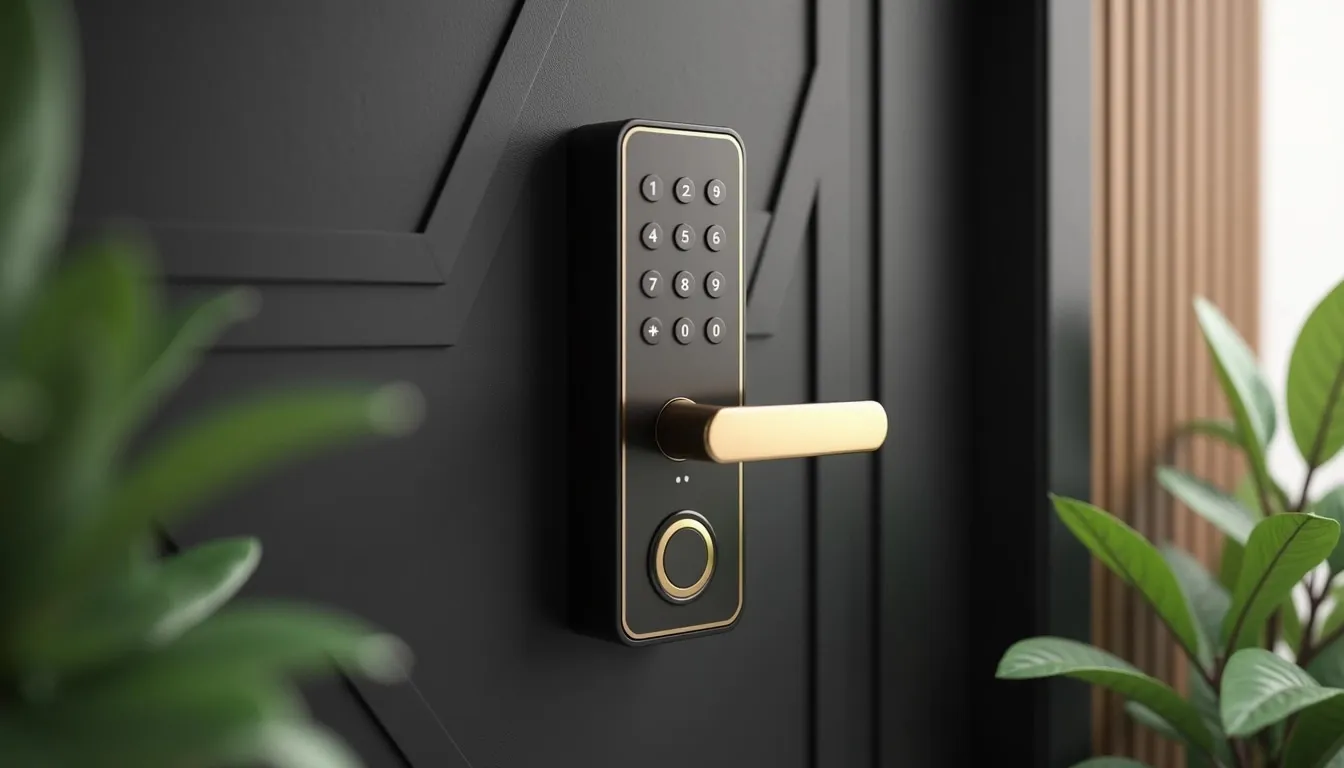
- Smart locks solve this partially. A keypad means a forgotten key is not a lockout. It does not remove the mechanical key, which still exists, still opens the door, and still needs to be somewhere sensible.
Frequently Asked Questions
I lost the only key to my NYC apartment. Can a locksmith just cut me a new one?
Not by duplication, because that needs an existing key to copy. A locksmith can originate a key from the lock, or rekey the cylinder and issue new keys with it. For a standard apartment cylinder the rekey is usually cheaper, and it has the advantage of making the lost key useless, which originating a new key does not.
Does my landlord have to let me in?
There is no obligation to fund or attend your lockout. If the super has a working key and is available, that is the cheapest route, but do not assume one exists. In a small building with no on-site super, or where the cylinder has been changed since you moved in, or where you installed your own lock under MDL § 51-c, there may genuinely be no key on file that opens your door.
How much should this cost in New York City?
An evening lockout is $125, and overnight between 2:00 AM and 7:00 AM is $195. Rekeying is from $75 per cylinder, with a typical apartment door at $150 to $185 for both cylinders. Roughly $275 to $310 covers the common case of getting in plus killing the lost key.
Can my landlord charge me for a rekey after I lose keys?
Possibly, but only under General Obligations Law § 7-108 as damage beyond normal wear and tear, and only as a reasonable and itemized cost. The landlord bears the burden of proving the amount was reasonable. A rekey is not a lock replacement, and the price difference between them is large.
Should I tell my landlord I lost the key?
Yes, in writing. A documented report with a date is far better than the same fact surfacing on a deposit statement after you move out. If you had a locksmith rekey the door, include what was done and what it cost.
Will my renters insurance cover it?
Some policies cover lock replacement after keys are lost or stolen, often with a low limit and subject to the deductible. It is worth reading your policy before you assume either way, particularly if the keys were stolen rather than mislaid, since theft is treated differently from loss.
Need Expert Help?
If you have questions about any of the security solutions discussed in this article, our team is ready to provide expert guidance.
Call us at (844) 912-1908 for a free consultation or to schedule a service.