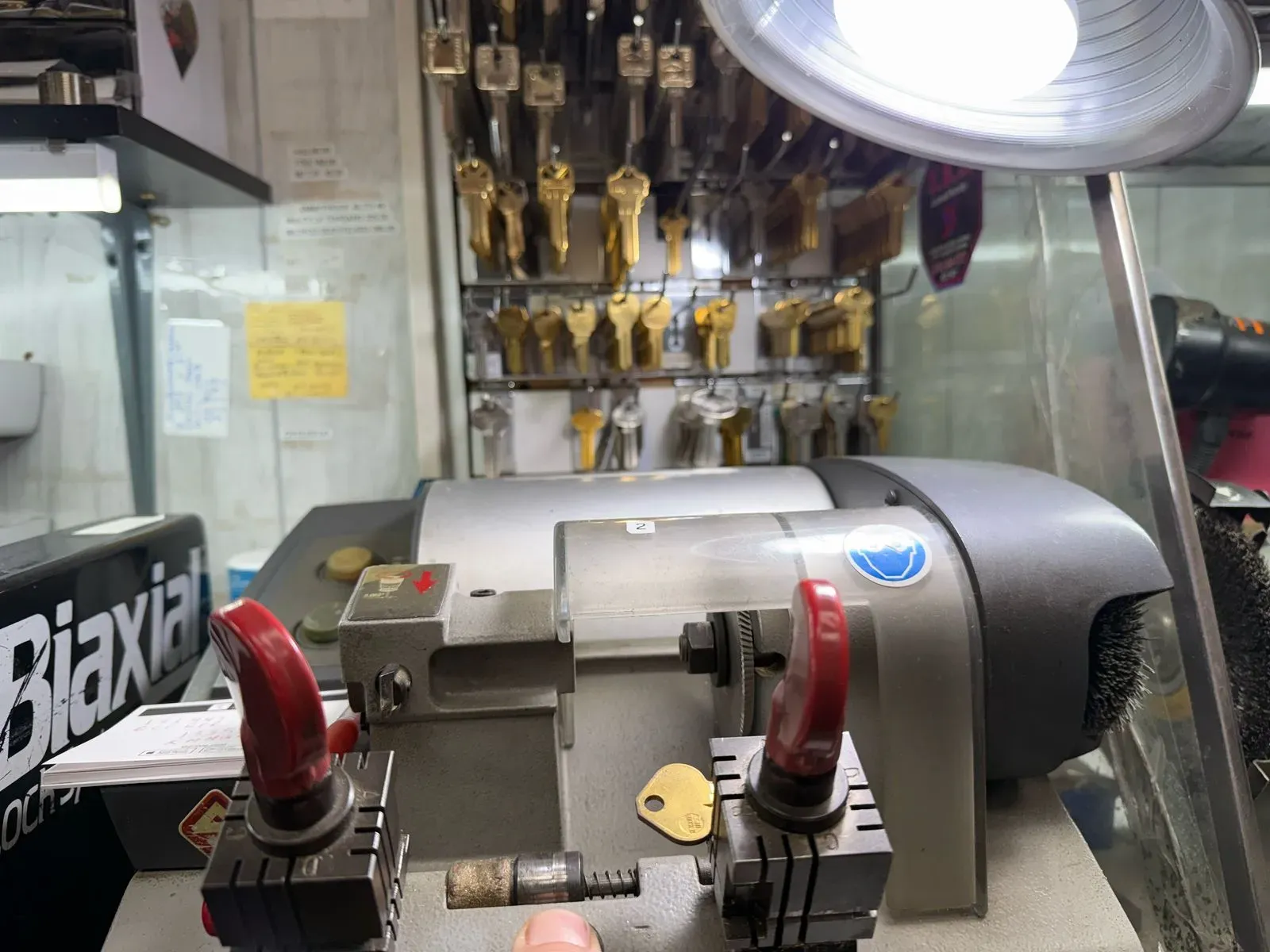
Can a Locksmith Make a Key From the Lock? In NYC, Yes
Yes. For most door locks, a licensed locksmith can make a working key with no original to copy, either from a key code or from the lock itself. In New York City that job is reserved by law to licensed locksmiths, and the rules expect the locksmith to identify you and check the lock is yours before making the key. Bring ID and proof you live there, and the hard part is over.
That is the short version. The rest covers how the job works in broad strokes, when making a key is the wrong job, which keys cannot be made from the lock at all, and what the city's locksmith rules require of whoever does it.
Copying a key and making one are different jobs
A copy starts from a key you already have. The machine traces it and cuts a blank to match, which takes minutes and costs $30 to $85 depending on the key, as the key copy price guide explains. Any decent key shop can copy a standard key.
Making a key with no original, which the trade calls originating a key, starts from the lock. It takes a locksmith on site or the cylinder on a bench, it takes longer, and in New York City it is licensed work. If you have even a broken half of the old key, say so: it can turn an origination job back into a copy job.
How a key gets made without the original
There are three broad routes, and the locksmith picks the one that fits the lock in front of them.
From a key code. Many locks and keys are made to a code that maps to a set of cuts. The code may be stamped on the original key, printed on the lock's packaging or paperwork, or on file with whoever set up a building's master key system. With the code and the right blank, a key can be cut without touching the lock.
From the cylinder itself. The locksmith removes the cylinder, reads the pins inside, and cuts a key to match. This is the most common route for a lost house or apartment key, and since the cylinder is out anyway, it is also the moment to ask whether a rekey makes more sense.
At the door. Some keys can be fitted at the lock without taking it out, a slower, skilled job the trade calls impressioning. Whether it suits your lock is a judgment for the technician.
We describe these at this level on purpose. The method is the locksmith's business; what you need to know is that it is possible, it is regulated, and it starts with proving the lock is yours.
When making a key is the wrong job
Ask yourself one question first: is the old key just gone, or could someone else have it?
If you snapped your only key or dropped it down a grate, a new key for the existing lock is fine. If the key was lost somewhere with your address nearby, stolen, or still held by someone who should no longer get in, a new key fixes your problem and leaves theirs intact. That is the case for a rekey: new pins, new keys, and every old key stops working, for $85 to $150 on a standard door with a knob and a deadbolt.
Ask for both prices on the same visit: making a key for the lock as it is, and rekeying it. When the old key is missing rather than broken, the rekey is usually the better buy. The guide to losing the only key to a rental covers who pays for which, and why the landlord's copy is not always there when you need it.
Keys that cannot be made from the lock
Restricted and high-security keys. Medeco, Mul-T-Lock and similar systems control their key blanks. Medeco says its keys are "only available from authorized Medeco dealers." Without the key card or authorization that goes with the system, no locksmith should cut one, and a proper one will not. The high-security key duplication guide explains what to bring, and the restricted keyway guide covers why buildings choose them.
Mailbox locks. Most apartment mailbox locks are cheap wafer locks, and replacing them is usually faster than making a key. Mailbox lock replacement starts at $95.
What NYC law requires of the locksmith
The city's locksmith rules sit in Administrative Code Title 20, Subchapter 15, and three parts of them apply when you need a key made.
Only a licensed locksmith may make it. Section 20-301(a) makes it unlawful "for any person other than a licensed locksmith to open any lock for which a key or combination may have been lost; or to make any repairs to, or change in, the mechanical adjustment or combination of any lock; or to make any original key."
The locksmith has to know who asked. Section 20-301(b) requires a record of "the name and address of every person ordering master keys, keys by number, or ordering the opening of a locked item," with the date and time, plus "the means relied upon to identify any person" and to verify ownership. For openings, §20-301(d) requires "a good faith effort" to identify the person and "obtain proof" that they own the lock or are authorized to have it opened.
The key carries the locksmith's name. Under §20-303, "all keys made by a licensed locksmith shall be stamped with his or her name and address or with the license number." An unmarked key from a locksmith is worth a question before you pay.
One change is scheduled. Local Law 183 of 2025 replaces this subchapter on May 31, 2027 and moves licensing from individual locksmiths to licensed locksmith businesses; the guide to checking a locksmith's license covers what that means for you.
Master keys: the strictest rule
A building's master key is the one key the code treats differently. Section 20-303 requires every master key to "bear the word 'master'," and its duplicates are made "only upon the signed order of the owner of the locks." That is why a tenant cannot walk in with the super's master and walk out with a copy, and why a managing agent ordering master keys should expect to sign for them. If you manage a building and the master key system's records are gone, a new key made from a cylinder is the wrong fix; the system needs its pinning chart rebuilt, which the master key system guide explains.
Our own rule matches the spirit of the law: we ask for ID plus proof of residence or authorization before opening a lock or making a key for it. Nobody enjoys showing paperwork at their own door, but a locksmith who skips that step will skip it for anyone, including someone who is not you.
What to have ready
- Photo ID, ideally with the address of the lock.
- Proof of residence or ownership if the ID shows another address: a lease, a utility bill, a deed or closing papers, a co-op proprietary lease.
- Authorization if the lock is not yours personally: a letter from the owner or managing agent for a building or business lock, letters from the court for an estate.
- Any key pieces, codes or paperwork: a broken key half, a key code tag, a high-security key card.
- The lock's location and type, if you can describe it on the phone: apartment door, mortise lock, deadbolt, padlock.
Frequently Asked Questions
Can a locksmith make a key without the original? Yes, for most pin-tumbler door locks, from a key code or from the lock itself. In New York City only a licensed locksmith may make an original key, and the rules require them to record who ordered it and how they checked.
Is it cheaper to make a new key or rekey the lock? Ask for both prices on the same visit. If the old key could be in someone else's hands, rekeying at $85 to $150 a door is the better buy, because it retires every old key along with giving you new ones.
Can a locksmith make a key from a photo? A clear, flat photo of a key's cuts can be enough for a trained eye to read, which is why you should never post a photo of your keys. Making a key for someone who cannot show the lock is theirs is exactly what the city's rules exist to prevent.
Can a locksmith make a high-security key from the lock? Not without authorization. Restricted systems such as Medeco and Mul-T-Lock control their key blanks through authorized dealers, so you need the key card or registration that came with the system.
What do I need to show a locksmith to get a key made? Photo ID and proof that you live at the address or own the lock, such as a lease, utility bill or deed. For a building, business or estate lock, bring written authorization.
Need Expert Help?
If you have questions about any of the security solutions discussed in this article, our team is ready to provide expert guidance.
Call us at (844) 912-1908 for a free consultation or to schedule a service.