Can You Put a Lock on Your Bedroom Door in an NYC Apartment?
Usually yes, if three things line up: your lease or your landlord allows it, the lock opens from inside without a key, and it does not turn the apartment into separately locked rooms. A privacy lever or a keyed entry lever meets all three. A padlock on a hasp meets none of them, and it happens to be one of the warning signs the Department of Buildings lists for an illegal conversion.
That is the short version. Here is where each rule comes from, which locks fit a bedroom door, and the fire-escape problem most roommates never think about.
Start with the lease
A lock on a bedroom door is an alteration to the owner's apartment, and most New York leases require the owner's consent for alterations. Ask in writing, say exactly what you want to install, and agree on what happens at move-out: leave it, or put the original hardware back.
The state law that gives tenants a lock of their own does not reach the bedroom. Multiple Dwelling Law §51-c covers a lock "in the entrance door of his particular housing unit," separate from the owner's lock and "not more than three inches in circumference." It says nothing about interior doors, so a bedroom lock falls back on the lease.
Most owners say yes to a privacy lock on a bedroom, especially when you offer to keep the original knob and reinstall it when you leave. The post on whether a tenant can change the locks covers the entrance door side of the same question.
The code rule: it has to open from inside
The NYC Building Code's rule for doors on the way out of a space is short: "egress doors shall be readily openable from the egress side without the use of a key or special knowledge or effort" (§1010.1.9). A bedroom door is on your way out of the bedroom. A lock that needs a key from the inside can trap you, or a roommate, in a fire.
The same idea runs through the rules for the apartment's own front door. The code allows a night latch, a deadbolt or a security chain on a dwelling unit door "provided such devices are openable from the inside without the use of a key or tool" (§1010.1.9.3). Nothing in the code carves out an exception for a bedroom.
So the test for any bedroom lock is simple. From inside the room, can anyone get out with one motion, in the dark, without hunting for a key? If yes, the lock passes. A double-cylinder deadbolt, keyed on both sides, fails. So does any lock you have to unlock from inside with a key.
Why the Buildings Department cares: illegal conversions
The Department of Buildings publishes a checklist for tenants who suspect they are living in an illegal conversion. One of its questions is: "Do you lock your room with a padlock?" Its examples of illegal conversions include "creating a rooming house (single room occupancy) or dividing an apartment into single room occupancies." Its tips for spotting one tell tenants to "look out for locked doors in the unit," because "a tenant should be able to access all available exits either directly from the unit or a public hallway."
That does not make every bedroom lock suspect. Roommates sharing one apartment on one lease, each with a privacy lock, are not a rooming house. The warning sign is an apartment carved into rooms rented separately, each padlocked from outside, with exits behind someone else's locked door. If that describes the place you are renting a room in, the lock on your door is the least of the problems.
The fire escape problem
Here is the New York part. In many walk-ups, the only window onto the fire escape is in one of the bedrooms. If that bedroom is locked while its tenant is away, everyone else in the apartment has lost a way out.
Before anyone locks a bedroom, walk the apartment and find the fire escape window and every exit. If an exit sits behind a bedroom door, that door should not lock when the room is empty, or every roommate needs a way through it. The Buildings Department's own tip, that a tenant should be able to reach every available exit, is the rule to work backwards from.
Choosing the right lock for a bedroom
Interior doors take interior hardware, and the options are better than a padlock.
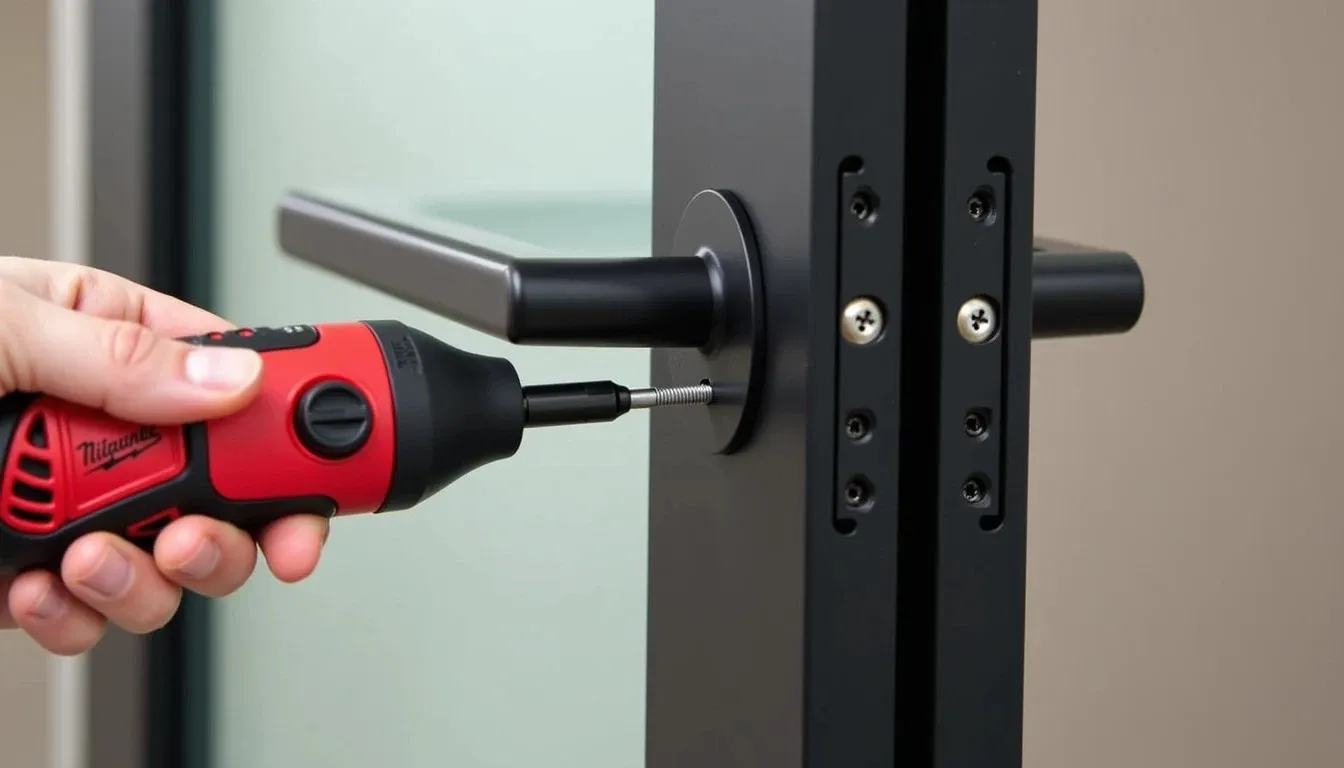
- Privacy lever or knob. A push button inside locks it; the inside lever always opens it. From outside, a small emergency release opens it in seconds. Right for most bedrooms, and the easiest version for an owner to approve.
- Keyed entry lever. Locks with a key from outside, while the inside lever always turns freely. Right when you want the room locked while you are out.
- Keypad lever. A code from outside, a free lever inside. No keys to lose or copy, and codes can change when a roommate does.
- Skip these: double-cylinder deadbolts, hasps and padlocks, and slide bolts that take a key.
Pre-war apartments add a wrinkle. Many bedroom doors still carry their original mortise lockset, the kind with a small keyhole for a skeleton key. That is a warded lock: charming, easily opened with almost any old key, and not something to rely on. It cannot be rekeyed either, as the guide to which locks can be rekeyed explains. The usual fix is a modern lever mounted with a conversion plate, so the old mortise pocket stays hidden and the door is not cut further.
One honest limit. Most interior doors are hollow-core and their frames are light, so a bedroom lock gives privacy, not real security against force. If you need to protect valuables, a small bolted-down safe does more, and the guide to buying and installing a safe covers the options.
Roommates, keys and the landlord's access
Give a spare key or the code to someone you trust, inside or outside the apartment. A locked bedroom with nobody able to open it turns a burst radiator pipe into a drilled lock.
The owner's right to enter for repairs and inspections, on notice, covers the whole apartment, bedroom included. A lock on the bedroom door does not cancel it, and agreeing on access in advance is better than a locked door on repair day. The post on whether your landlord gets a key covers the notice rules. If a roommate moves out and you want their old room rekeyed, or the apartment door, the roommate guide covers when you may.
What it costs
A bedroom lever installed on a standard interior door falls under lock installation, $125 to $450 per opening depending on the hardware and the door. A keypad or smart lever is a smart lock installation, $275 to $500. The service call depends on the hour, $60 from 8 a.m. to 6 p.m., and installing a bedroom lock is never an emergency, so book it in business hours.
When you move out
Keep the original knob and its screws in a labeled bag. If your agreement with the owner was to restore the door, put the original hardware back and photograph the door before you hand over the keys. The guide to keys, locks and your deposit covers what owners may and may not deduct.
Frequently Asked Questions
Is it illegal to have a lock on a bedroom door in NYC? No, not as such. The Building Code requires that it open from inside without a key or special effort, and your lease may require the owner's consent. What the Buildings Department flags is padlocked rooms in apartments divided into separately rented units.
Can my landlord stop me from putting a lock on my bedroom door? In most cases, yes, through the lease's alteration clause. Ask in writing and offer to keep and reinstall the original hardware; most owners agree to a privacy lever on those terms.
Can I put a deadbolt on my bedroom door? Only a single-cylinder deadbolt with a thumb-turn inside, and only with the owner's consent. A double-cylinder deadbolt, keyed on both sides, fails the code's rule that a door must open from inside without a key.
Can my landlord still enter my bedroom? The owner's right to enter the apartment for repairs and inspections, with proper notice, includes the bedroom. Agree on access in advance so nobody has to defeat the lock.
What kind of lock is best for a bedroom in a shared apartment? A privacy lever for most people, or a keyed entry or keypad lever if you want it locked while you are out. All three open freely from inside.
Do I need a locksmith to install a bedroom lock? Not always. Swapping a knob for a lever on a standard modern door is a screwdriver job. Old mortise doors, metal doors and anything that needs new holes drilled are where a locksmith earns the fee; the post on whether you need a locksmith to change locks draws the line.
Need Expert Help?
If you have questions about any of the security solutions discussed in this article, our team is ready to provide expert guidance.
Call us at (844) 912-1908 for a free consultation or to schedule a service.