Renovating a NYC Apartment? Control the Contractor Keys.
Assume every key you hand a contractor gets copied, and plan the job so that it does not matter. That is not cynicism about your GC. It is arithmetic about how many people end up holding that key before the work is done, and the fix is cheap if you set it up before demolition rather than after the punch list.
That is the short version. Here is how the arithmetic actually works, and what to do about it.
You are not giving a key to one person
You hand one key to your general contractor. Over a ten-week NYC apartment renovation, the people who plausibly need to open that door include the GC, the site foreman, an electrician, a plumber, a tile setter, a painter, a floor crew, an appliance delivery, a cabinet install team, and whoever gets sent back to fix the thing the inspector flagged.
Most of those are separate companies. The GC does not hand his single key to each of them in sequence and collect it back every evening, because that would make the schedule impossible. He cuts copies, or he leaves the key in a lockbox with a code that gets texted around, or the super holds one and lets people in.
None of that is misconduct. It is how the trade works, and it is the only way a multi-crew job runs on time. But at the end of it, the honest answer to “who has a key to my apartment” is that nobody knows, and that is the actual problem. It is not about trust in any individual. It is that key control dissolves at the point where a key becomes copyable and the number of holders stops being tracked.
The two ways to fix it, and which one you want
Option one, the cheap one: plan to rekey at the end. Let the job run on whatever key arrangement is convenient, and rekey the cylinder the day the last crew leaves. Every copy in circulation stops working at once, and you never had to police anything during the work.
This is the right answer for most apartment renovations. Rekeying starts at $75 per cylinder, which is a rounding error against a renovation budget, and it is the only method that is genuinely complete, because it does not depend on anyone returning anything.
Option two, the controlled one: a temporary cylinder. Fit a cheap cylinder for the duration of the job and put your real one back at the end. Copies of the construction key are then worthless the moment the original goes back in, and your permanent key was never in the building while strangers had access.
This costs more than a rekey and is worth it when the door hardware is expensive or unusual, which in NYC often means a pre-war mortise with original brass you do not want a site crew handling twice a day.
A note on construction keying. Commercial jobs often use construction master keying, where the permanent key voids the construction key the first time it is turned. It is a genuinely useful system and it is built into a lot of commercial-grade hardware. It is also rarely worth specifying for a single apartment, because you are paying for a keying system to solve a problem a $75 rekey solves at the end. Ask for it on a whole-building or multi-unit job, not on one kitchen.
The control that actually stops copying
If you want the key to be uncopyable during the job rather than replaced after it, that means a restricted keyway.
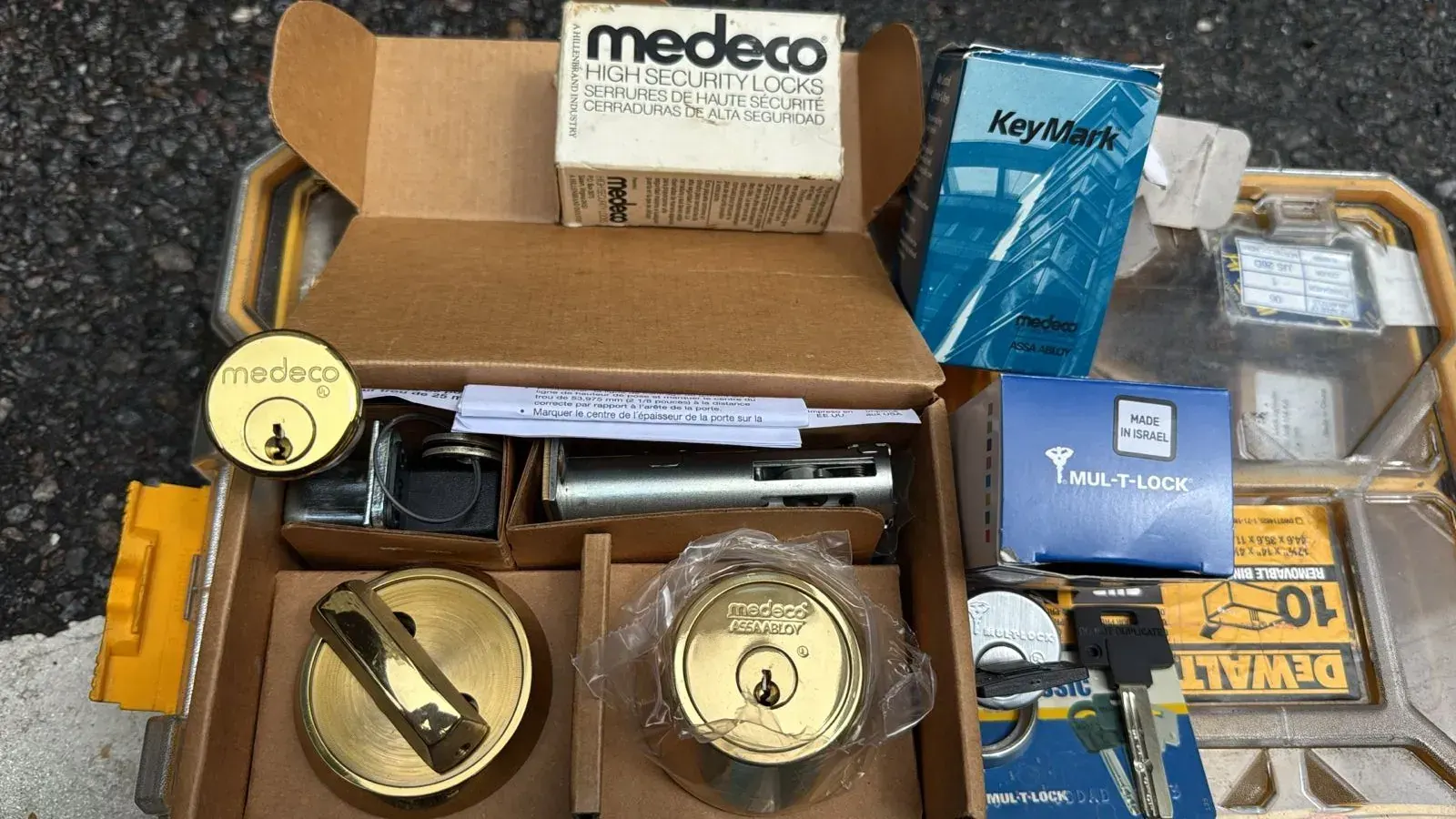
High-security cylinders like Medeco, Mul-T-Lock, and Schlage Primus use patented key blanks that are not sold to hardware stores. A copy cannot be cut at the corner shop or at a big-box machine, because the blank does not exist there. Duplicates come only from an authorized dealer, against a card or a documented authorization, which means every copy that exists is a copy someone signed for.
That is the real difference between a high-security cylinder and an ordinary one, and it is worth being precise about it: the value is not that the lock is harder to pick. Picking is not how apartments get entered. The value is that the key cannot be quietly duplicated, which is exactly the failure mode a renovation creates. If you were already thinking about upgrading, doing it before a renovation is better timing than after. We fit them through high-security lock installation.
If you are in a co-op or condo, read this part first
Two things change in a building with a board.
Your alteration agreement probably has an access clause. Most NYC co-op alteration agreements require that building staff retain access to the unit during work, and many require a key on file with the super or the managing agent. Read yours before you change anything, because unilaterally rekeying mid-renovation can put you in breach of the agreement you signed to get the work approved.
Your door may be on a building master key system. In a lot of NYC buildings the apartment cylinder is keyed so the super’s master also opens it, for emergencies like a burst pipe. Rekeying that cylinder without telling anyone quietly removes the building from its own emergency access, which tends to surface at the worst possible moment.
The practical route is to tell the managing agent what you intend to do and when. A rekey that keeps the building master working is straightforward for a locksmith to set up. A rekey that removes it is also straightforward, but it is a conversation with the board, not a decision to make on your own.
One useful thing about rekeying in a co-op: it is fully reversible and makes no change to the door, the frame, or the strike, which is why it usually sits outside the alteration approval process that a hardware change would trigger. That distinction is worth knowing before you assume you need board sign-off. There is more on how co-op door work differs in residential locksmith services.
What it costs
| Job | NYC cost |
|---|---|
| Rekey, per cylinder | from $75 |
| Typical apartment, knob and deadbolt rekeyed | $150 – $185 |
| Standard Grade 2 deadbolt, supplied and installed | from $150 |
| Lock installation or replacement, per opening | $125 – $450 |
| High-security cylinder, restricted keyway | quoted on site |
High-security cylinders are quoted on site rather than listed, because restricted blanks are priced by the manufacturer and by which system the building already uses. We give a firm number before any work starts through our lock change and rekeying service.
The end-of-job checklist
Do this on the day the last crew leaves, not a month later when you notice the spare key is missing.
- Rekey the apartment entrance cylinder. All of them, if the door has both a knob and a deadbolt. Old keys stop working immediately.
- Collect the lockbox. If a coded lockbox was hung on the railing or the gas pipe, it is still there, and the code is still in a group chat. Remove it.
- Deal with the mailbox key separately. People forget it constantly. It is a different lock, it was often handed over for deliveries, and it is cheap to replace. See mailbox lock replacement.
- Audit fobs and building credentials. A building entry fob that was loaned to a crew is not fixed by rekeying your apartment door. Fobs are deactivated by the managing agent, so ask for it in writing and confirm it was done.
- Check what the super holds. Find out whether the key on file is a copy of the old key, and get it replaced with the new one. Skipping this is how you end up locked in an argument with the building the first time there is a leak.
- Reset any smart lock codes. Temporary codes issued to crews should be deleted, not just left unused. If the lock keeps a log, read it once before you clear it.
The one thing worth doing before demolition
Photograph the existing hardware before the job starts, particularly on a pre-war door with original hardware. Renovation crews remove door hardware to paint, and a mortise lock that goes into a bucket in week two does not always come back correctly in week nine. A dated photograph settles that conversation quickly, and it also tells your locksmith exactly what is on the door before anyone opens it.
If something did go missing or come back wrong, lock installation and repair covers putting a pre-war door back to how it was, which is usually a repair rather than a replacement.
Frequently Asked Questions
Should I rekey after a renovation, or just get my keys back?
Rekey. Getting keys back only accounts for keys you knew were issued, and the whole problem with a multi-crew job is that copies get cut without a record. A rekey from $75 per cylinder invalidates every copy in existence at once, whether or not you knew about it.
What is the difference between rekeying and changing the lock?
Rekeying re-pins the cylinder you already have so old keys stop working and new ones do, and keeps your existing hardware. Changing the lock means new hardware on the door. After a renovation you almost always want a rekey, because there is nothing wrong with the lock, only with who might have a key.
Can my contractor legally keep a key to my apartment?
Whether he may hold one during the work is a matter of your contract with him, not of statute. What matters practically is that no contract prevents copies from having been made, which is why the fix is to rekey at the end rather than to rely on a clause.
I live in a co-op. Do I need board approval to rekey during a renovation?
Check your alteration agreement, because many require the building to keep access to the unit during work. Rekeying itself makes no change to the door, the frame, or the strike and is fully reversible, so it usually falls outside the alteration approval that a hardware change would need. Tell the managing agent before you do it, particularly if the cylinder is on the building master key system.
Will a high-security lock stop a contractor copying my key?
Yes, and that is its main practical benefit in this situation. Medeco, Mul-T-Lock, and Schlage Primus use patented blanks that hardware stores do not stock, so duplicates come only from an authorized dealer against documented authorization. It does not remove the need to rekey if a key goes missing, but it does mean casual copying is not possible.
When in the job should I book the locksmith?
The day the last crew is scheduled to leave, booked a week ahead. Renovations run late, and a rekey is a short job, so it is easy to move by a few days. What you want to avoid is finishing the work and getting to it a month later, which is the gap where the keys are still out and nobody is tracking them.
Need Expert Help?
If you have questions about any of the security solutions discussed in this article, our team is ready to provide expert guidance.
Call us at (844) 912-1908 for a free consultation or to schedule a service.