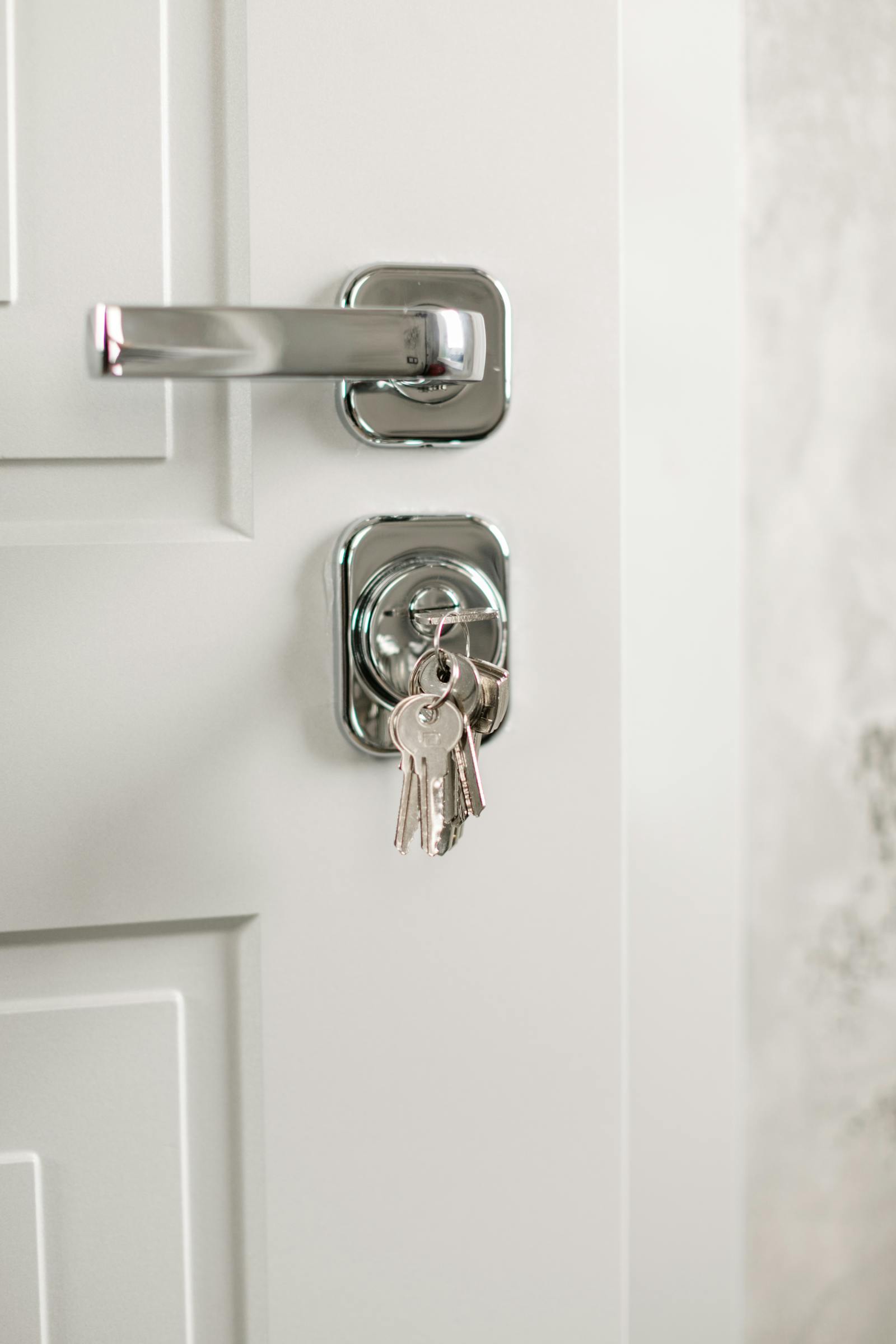
Why a $19 Deadbolt Won't Stop a 30-Second NYC Burglar
A NYC hardware store sells two deadbolts side by side. One is $19, the other is $89. Same finish, same shape, similar packaging. A reasonable shopper looks at them, decides the difference is "branding" or "thickness of the brass," and picks the cheap one. They are wrong, and the difference shows up in the 90-second window between someone deciding to break into the apartment and giving up because the door held.
This is what each of those locks actually does under attack, and where the real security floor sits in NYC.
What the $19 deadbolt is made of
Pull the cheap deadbolt out of the package. Three things you will notice:
- The body is zinc, not brass. Zinc alloy is roughly half the tensile strength of solid brass at the thickness used in residential locks. Under torque, zinc bodies crack along the casting seam.
- The bolt is hollow and short. A 5/8-inch throw is common at this price point. The bolt also tends to be made of pressed steel, not solid hardened steel, it bends instead of holding.
- The strike plate ships with 3/4-inch screws. The screws go through the strike, through the door jamb pine, and stop. They do not touch the framing stud behind the jamb.
ANSI/BHMA grading is the tell. Cheap deadbolts are either Grade 3 (the weakest residential rating) or, more often, uncertified. The packaging will say things like "heavy duty" and "solid metal" but not "Grade 1" or "Grade 2." If the lock is not graded, it failed the test or was never tested.
What Grade 3 actually means: the lock survives 2 strikes with a 75-pound impact and 200,000 operating cycles. A NYC apartment door takes more than two kicks in a serious break-in attempt. The lock is rated for a level of force a single determined kick exceeds.
What the $89 deadbolt is made of
Same form factor, very different physics:
- Solid brass body machined from bar stock. About twice the tensile strength of the zinc casting.
- 1-inch throw with a hardened steel bolt containing a roller pin so the bolt cannot be sawn from the outside.
- Reinforced strike plate with hardened steel and pre-drilled holes for 3-inch wood screws, they go through the jamb into the framing stud.
The grade is on the box: ANSI/BHMA Grade 1. That rating requires the lock to survive 10 strikes with a 75-pound impact, plus 800,000 operating cycles, plus specific torque and pull resistance tests. Same testing rig, very different outcome.
Brand examples in this range:
- Schlage B660 or B560 (Grade 1 or Grade 2 depending on model)
- Medeco Maxum (Grade 1, plus UL 437)
- Kwikset commercial line (Grade 1, but not the SmartKey residential)
We cover the brand-by-brand differences in our Schlage vs Mul-T-Lock guide.
What actually happens under a NYC kick
A typical adult male can deliver about 200 pounds of impact force in a focused kick. In a NYC apartment break-in, the kick lands on the lockset area, not the door panel, the attacker is targeting the strike, not the wood.
Against the $19 deadbolt with stock screws:
- First kick: the 3/4-inch jamb screws tear through the pine. The strike plate bends and twists. Door pops open or hangs loose. Total time elapsed: about 2-3 seconds.
- Sound: one crack, then footsteps inside.
Against the $89 Grade 1 deadbolt with stock screws:
- First kick: the deadbolt holds, but the same 3/4-inch jamb screws give way. The strike plate detaches. Door pops. Total time: 3-5 seconds.
- The lock itself survived. The door defeated the door, not the lock.
Against the $89 Grade 1 deadbolt with 3-inch reinforced strike screws:
- First kick: strike holds. Some jamb deformation.
- Second kick: strike still holds. Wood around it splits visibly.
- Third to sixth kick: depending on the door material, the strike still holds; the door itself starts cracking.
- By kick 6-8: if the door is hollow-core, the door breaks before the strike does. If the door is solid wood or steel, the attacker often gives up, too much noise, too much time, neighbors hear.
This is why we tell every client: the lock matters less than the strike plate screws. Upgrading the deadbolt without upgrading the strike fasteners is fixing the strong part of the system.
The cheap upgrade that out-performs an expensive deadbolt
Here is the result that surprises clients. A $19 deadbolt with the strike upgraded to 3-inch screws into the framing stud out-performs an $89 deadbolt with stock 3/4-inch jamb screws.
The strike plate fastening is the weak link in 80% of NYC residential doors. Hardware stores sell $4 packs of 3-inch screws and they take 5 minutes to install. The improvement in kick resistance is about 4x, from one kick to four or five kicks before failure.
This is also why a thousand-dollar Mul-T-Lock cylinder on a door with stock screws is partially wasted money. The cylinder is unpickable, unbumpable, and impossible to drill, but the door still fails the kick test before the cylinder ever has to defend against picking. Install the cylinder, sure, but install the strike upgrade first.
What the floor looks like for a NYC apartment
For a typical NYC apartment door, our hardening floor is:
| Component | Spec |
|---|---|
| Deadbolt | ANSI Grade 1 (Schlage B660 or equivalent), solid brass body, 1-inch hardened steel bolt |
| Strike plate | Reinforced steel, 3-inch screws into framing stud |
| Cylinder | Standard Grade 1 cylinder OR high-security cylinder (Mul-T-Lock / Medeco) on higher-risk units |
| Door reinforcement | Wraparound plate if the door is hollow-core or thin |
| Secondary | Optional chain bolt or sash lock for redundancy on ground-floor units |
Total installed cost: $280 to $450 for the package, depending on which cylinder grade and whether door reinforcement is needed. Single visit, 60-120 minutes on a NYC apartment door.
This package survives the kind of forced-entry attempt that defeats roughly 75% of unhardened NYC apartment doors.
Where the $19 deadbolt is fine
There are doors where the $19 deadbolt is the right answer:
- Interior doors (bedroom, office, closet)
- Garages in low-risk locations
- Shed and storage rooms that do not contain high-value items
- Secondary locks on doors already protected by a Grade 1 primary lock
Anywhere the lock is the only thing between an intruder and your apartment, the $19 deadbolt is below the security floor.
Why we are blunt about this
The reason a lot of NYC apartments have $19 deadbolts on the front door is that nobody told the resident the difference until after a break-in. The packaging implies the lock is a serious security product. The price implies it is "good enough." Neither is true for the threat model NYC actually presents.
We would rather you spend $300 on a hardened door before the break-in than $1,500 on hardening plus contents replacement plus a week of stress after one. Call (844) 912-1908 and we will quote a security upgrade for your specific unit. We do this work daily across all five boroughs.
We also offer emergency lockout response, lock installation and repair, and smart-lock installation for clients who want the upgrade combined with connectivity. All work covered by our DCWP license and $1M liability insurance.
Frequently Asked Questions
Is ANSI Grade 2 enough for a NYC apartment door? Yes for most situations. The jump from Grade 3 (or ungraded) to Grade 2 is the meaningful one. The jump from Grade 2 to Grade 1 is a smaller marginal improvement. We install Grade 2 for clients with budget constraints and reserve Grade 1 for higher-risk units.
What is the cheapest single change I can make tonight to harden my door? Replace the strike plate screws with 3-inch wood screws into the framing stud. Cost: under $5 for a pack of screws. Time: 10 minutes. Effect: roughly 4x kick resistance.
Are smart locks a security upgrade? The connectivity is convenience, not security. The cylinder underneath the smart hardware is what determines security. A great smart lock with a $19 cylinder is still a $19 cylinder. We will tell you what your specific smart lock model uses underneath.
Why do hardware stores sell ungraded deadbolts at all? Because they sell. The shopper without a locksmith background looks for "metal" and "deadbolt" and a reasonable price. Grading is not required by law for residential locks in NYC, only for commercial installations under building code.
Is the $19 lock from a name brand any better than a no-name $19 lock? Slightly, because the name brand will at least have manufacturing quality control. Both are still in the ungraded or Grade 3 tier. The brand label does not change the rating.
Can a locksmith upgrade my existing deadbolt without replacing it entirely? Often yes. A cylinder swap into the existing deadbolt body, plus a strike plate upgrade, gets most apartments to a solid security floor at a fraction of the cost of a full deadbolt replacement. We will inspect and quote.
Need Expert Help?
If you have questions about any of the security solutions discussed in this article, our team is ready to provide expert guidance.
Call us at (844) 912-1908 for a free consultation or to schedule a service.