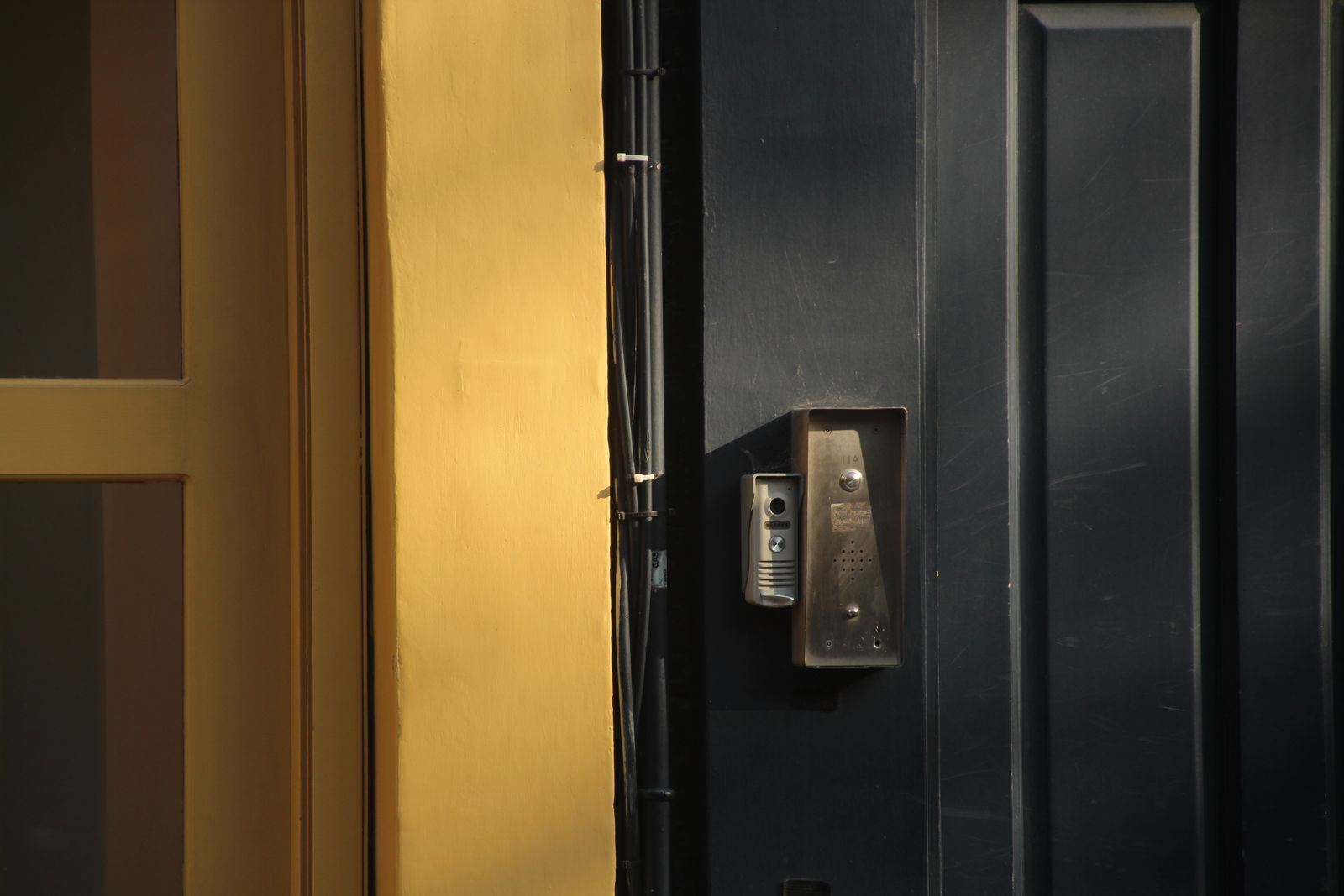
Buzzer Intercom vs Smart Entry for NYC Walkups
The intercom in your 1970s Bronx walkup buzzes. The button next to the apartment number does not work, so you press 5C even though you live in 3B. The visitor downstairs hears you say "come up" through a tiny brass speaker that has been collecting dust since the Carter administration. They pull the front door open after you hit the buzzer-release button, which sometimes works and sometimes does not.
This is the standard NYC walkup access experience. It works because the building has been doing it the same way since the lobby was new. It also costs the super an extra two hours a week of "the buzzer is broken again" calls, costs tenants an unknown amount of frustration when packages cannot be delivered, and offers approximately zero security.
There is a better option. It is not free. But the total cost of ownership versus the existing system is often a wash inside three years.
Here is the honest comparison for a small NYC walkup (4-12 units).
What the existing buzzer system actually is
For a 6-unit walkup built between 1900 and 1980 (which is most NYC walkups), the standard system has three components:
- A vestibule panel with a button per apartment and a small brass speaker.
- A tenant station inside each apartment with a speaker, a "talk" button, and a "door-release" button.
- A wiring harness running from the panel through the building's walls to each tenant station, plus a low-voltage transformer in the basement.
The vestibule panel is wired to ring a bell or buzzer in the tenant station when the matching button is pressed. The tenant presses "talk" to speak (one direction at a time, half-duplex) and "door-release" to send a brief pulse to an electric strike on the front door, which retracts and lets the visitor pull the door open.
The technology has not changed since the 1950s. It works, mostly, until one of three things happens:
- The transformer in the basement dies. Whole-building outage. $80 part, 30 minutes of work.
- The wiring corrodes inside a wall. Random units stop working. Often expensive to trace.
- The vestibule panel speaker rusts shut. No two-way communication; just buzz-anyone-who-buzzes.
The honest cost of maintaining a 1970s buzzer in 2026: about $400-$1200 per year for an average 6-unit NYC walkup, mostly in board-up-with-tape repairs and occasional electrician calls. Tenants increasingly route around the system entirely by texting each other to "come down."
What a smart entry system actually is
The modern replacement for a buzzer is a small panel at the front door, wired or wireless, that handles three operations:
- Visitor calls a tenant. Tenant gets a phone notification (or a panel ring inside the apartment) and can answer with video or voice. Two-way, full-duplex.
- Tenant releases the door. Through the app, through a panel button inside the apartment, or by entering a code.
- Tenant uses a keypad or app to enter directly. No physical key needed for the front door.
The leading products in this category for small NYC buildings are:
- ButterflyMX. Cloud-based intercom with a touchscreen panel. Per-unit subscription model. Probably the most common new install for NYC walkups in 2024-2026.
- DoorBird. Standalone IP intercom, no monthly subscription. More expensive upfront, no recurring cost.
- Latch. Smart access system with combined keypad + intercom. Originally aimed at larger multi-family.
- Aiphone IX-DV / GT series. Traditional commercial-grade IP intercom, less app-centric, more reliable hardware.
Each has a different fit. The cloud-based options (ButterflyMX, Latch) are easier to install and update but require a monthly per-unit fee. The standalone options (DoorBird, Aiphone) have higher upfront cost but no ongoing subscription. For a 6-unit walkup, the math usually favors standalone over 5 years.
The install reality for NYC walkups
A NYC walkup retrofit is harder than a new-construction install for three reasons:
- Existing wiring is non-standard. The 1970s buzzer used twisted-pair low-voltage wire that does not always carry IP traffic. Often the install requires running new Cat-6 or Cat-5e from the basement to the front door.
- The vestibule panel pocket is sized for the old intercom. Most modern panels are physically larger or smaller. Replacing means patching the surrounding wall and matching the building's finish.
- Each tenant station has to be addressed. Some tenants want a physical panel inside the apartment. Some are fine with just the app. Coordinating with 6 tenants who each have an opinion takes time.
Realistic install timeline for a 6-unit walkup:
- Pre-install planning: 1-2 weeks. Site visit, wiring survey, tenant coordination, board or owner approval if applicable.
- Hardware install: 1-3 days on site, depending on whether new wiring is needed.
- Tenant onboarding: 1-2 weeks of post-install support as tenants set up their app accounts.
Total project from "yes let's do this" to "fully working" is usually 3-6 weeks for a 6-unit building.
The work falls under the access control systems NYC and lock installation and repair NYC service categories. For larger buildings with multi-entry coordination, our commercial services NYC team handles the project management.
The total cost comparison, 5-year window
Numbers vary by building. These are honest mid-range estimates for a 6-unit NYC walkup.
Keep the 1970s buzzer:
- Annual maintenance: $400-$1200
- 5-year total: $2,000 to $6,000
- Outcome: ongoing partial-failure mode, super spends time chasing the system.
Install ButterflyMX (subscription model):
- Hardware + install: $3,500-$5,500
- Subscription: $15-$25 per unit per month = $90-$150/mo for 6 units
- 5-year subscription total: $5,400-$9,000
- 5-year grand total: $8,900 to $14,500
- Outcome: modern system, video, app-based, requires reliable internet at the building.
Install DoorBird (no subscription):
- Hardware + install: $4,000-$7,000
- Subscription: $0
- 5-year grand total: $4,000 to $7,000
- Outcome: modern system, video, no monthly fees, slightly more complex initial setup.
Install Aiphone IX (no subscription, commercial-grade):
- Hardware + install: $5,500-$9,000
- Subscription: $0
- 5-year grand total: $5,500 to $9,000
- Outcome: most durable hardware, longest service life (10-15 years vs 5-8 for consumer systems).
For most NYC walkups under 8 units, the DoorBird or Aiphone option pays back faster than the subscription products. For larger buildings (15+ units) the subscription products have better tenant management features and the subscription cost becomes a smaller percentage of the savings.
The features that actually matter
A smart entry system has dozens of marketed features. Most are noise. The ones that change quality of life:
- Video call to a phone. You can see the visitor before opening the door from anywhere. The single biggest tenant-satisfaction upgrade.
- Delivery code or QR. USPS, FedEx, UPS, Amazon couriers get a one-time PIN or a scannable code that opens the door without buzzing every tenant. This alone saves 30-60 hours of building disruption per year in an active walkup.
- Recorded entries. The system logs who opened the door and when. Useful for figuring out if a tenant was actually home when a package went missing.
- Tenant-managed visitor codes. Tenant generates a temporary PIN for a guest, contractor, or cleaner, valid for a specific window. No more "I have to be home to let you in."
- Integration with the apartment door lock. If you also upgrade individual apartment doors to smart locks, the front door and apartment door can share a credential system. Covered in the smart lock installation NYC page.
The features that sound exciting but are usually not worth the upgrade cost:
- Facial recognition. Privacy concerns, NYC tenants tend to dislike, technically still unreliable in low light.
- Two-factor auth at the door. Overkill for residential. Useful for commercial.
- Voice commands. Solves no real problem.
- Integration with thermostats and lights. Cool but not why you install an intercom.
When the old buzzer is actually fine
A 1970s buzzer is the right answer if:
- The building has 4 or fewer units and tenants have lived there for years.
- Internet at the building is unreliable (Wi-Fi-dependent smart systems will frustrate everyone).
- The owner is selling within 12 months and does not want capital expense.
- The building is landmarked and any vestibule modification requires a landmarks-preservation review that would take 18 months and cost more than the intercom itself.
In all four cases, keep the buzzer, schedule a deep-clean and parts-refresh service ($400-$700), and live with it for another few years. The honest threshold for upgrading is usually "tenants complain about access at least once a month."
The landlord / co-op board conversation
For rental walkups: this is a capital improvement, depreciable over 7 years per IRS schedules. The math is usually defensible if you can document that maintenance calls on the old system are 30+ hours per year. Tenant retention also improves measurably with modern access systems, which matters for owners who watch turnover rates.
For co-op walkups: this is a board decision. The pitch is "we replace a failing 1970s system with one that lasts 10 years and reduces super hours." Board approval typically requires 2-3 meetings: initial proposal, vendor selection, final budget. Bring competitive bids from 2-3 vendors. Have the bids include 5-year total cost, not just install cost.
For condo walkups: each unit owner pays a share of the common-element upgrade. Approval is usually a simple-majority vote at the next condo meeting. Same dynamics as co-op but faster.
Frequently asked questions
Will the smart intercom work without internet? The subscription products (ButterflyMX, Latch) require internet for the app-based calling. They fail to call-only mode if internet drops, where existing panel buttons still work. The standalone products (DoorBird, Aiphone) can operate fully on local network and do not require internet, though they are more useful with it.
Can I install just for my apartment, not the whole building? Not really. The intercom is the front door, which is shared. Individual apartment door upgrades are separate (smart locks, keypads). For a smart lock just on your unit, see the smart lock installation NYC page.
What happens if my tenants do not have smartphones? All modern systems have a physical panel option inside the apartment plus a keypad at the front door. Tenants without phones can still answer the door from the in-unit panel and can still hand visitors a code if needed. Plan for at least one in-apartment panel per unit if tenant demographics skew older.
Does NYC have any code requirements for replacement intercoms? The NYC Building Code requires multi-family buildings to maintain a working entry system. There are no specific requirements about which technology. FDNY requires that the door release does not interfere with egress (the door must always open from inside without authentication). All modern smart systems comply.
Will the smart intercom integrate with the building's existing electric strike? Yes for most installations. The strike is a low-voltage device controlled by a brief pulse from the intercom. Modern systems output the same kind of pulse, so existing strikes can usually stay. If the strike itself is failing, replace it during the install.
Can a single tenant veto the upgrade? In a rental, no. The landlord decides. In a co-op or condo, it depends on the bylaws but a single-vote veto is rare. The vote is usually a majority of unit-owners.
What if the building front door itself is failing? The intercom upgrade is the right time to also assess the door. A weak door makes any access control system pointless. See the door reinforcement NYC apartments post for the door-side upgrades.
Need Expert Help?
If you have questions about any of the security solutions discussed in this article, our team is ready to provide expert guidance.
Call us at (844) 912-1908 for a free consultation or to schedule a service.