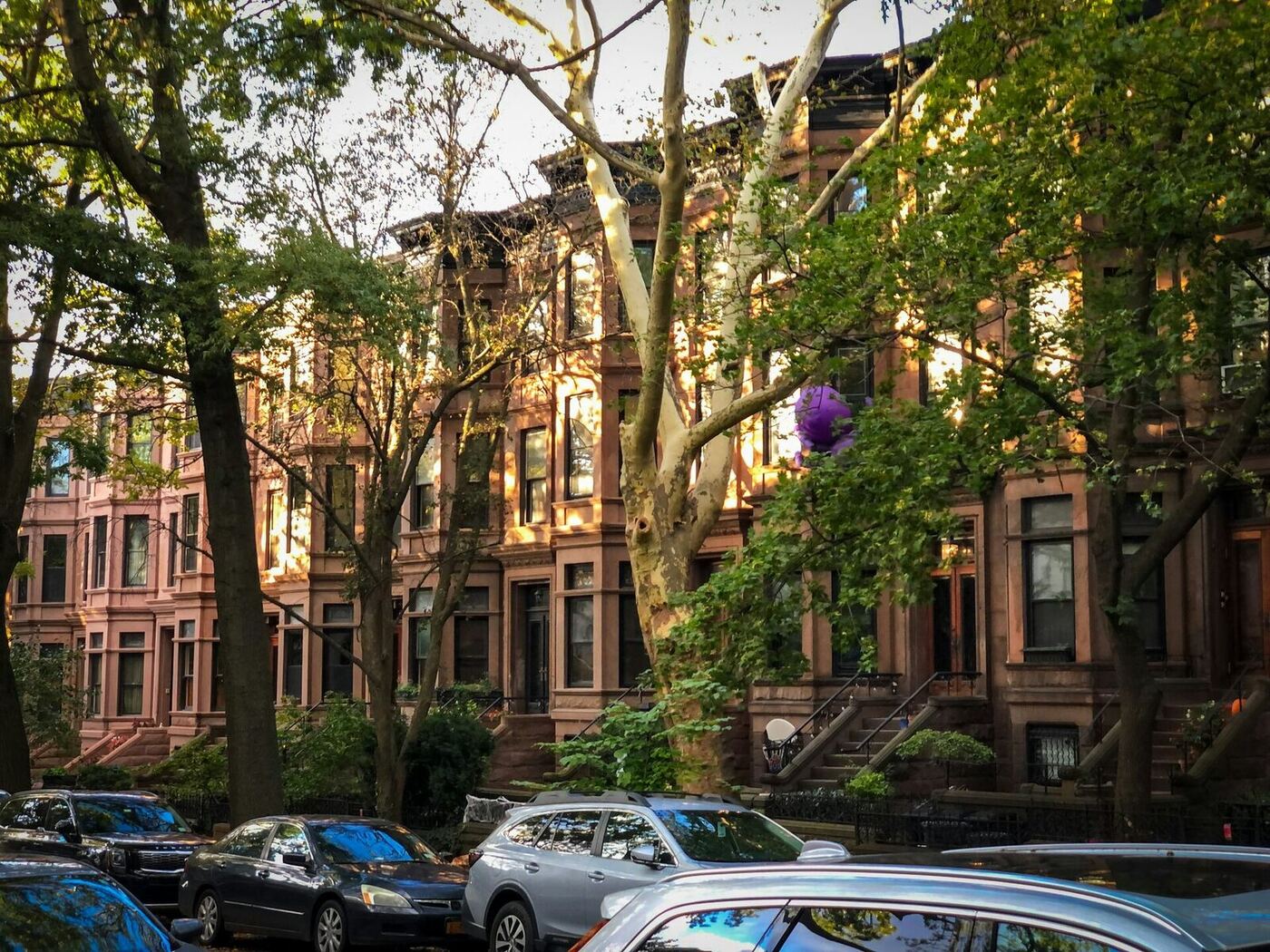
Locked Out of a Brooklyn Brownstone? The Full Guide.
You climb the stoop. You reach the vestibule door. Key in, no turn. You try the next key. Nothing. You realize you took the gym keys, not the house keys. You are now stuck on top of an iron staircase in Park Slope, between an outer door that locked behind you and an inner door that will not open. The brownstone you live in was built in 1894. The locks you are trying to defeat were installed somewhere between then and 1978.
This is the standard Brooklyn brownstone lockout. The geography is unique to brownstones (Park Slope, Brooklyn Heights, Cobble Hill, Fort Greene, Crown Heights, Bedford-Stuyvesant, Carroll Gardens, Clinton Hill), the hardware is old and often original, and the response is different from a typical apartment lockout. Here is the field guide.
The two-door problem
Almost every Brooklyn brownstone has a layered entry:
- The vestibule door (sometimes called the "storm door" or "outer door"). Original 1890s frame, often with leaded or etched glass, set into the limestone arch above the stoop. Lock is usually a rim cylinder operating a standalone deadlatch, plus often a mortise body with a thumb-turn from inside.
- The inner door ("parlor door"). The actual entry to the home. Heavier door, taller, often original mahogany or walnut with bullseye glass panels. Lock is almost always a brass mortise body, often Russwin, Sargent, or Yale, from somewhere between 1890 and 1940.
Get locked out and you can be on either side of either door. Each scenario has a different right answer.
Where you are determines the move
Stuck outside on the stoop, before the vestibule: Easiest scenario. The vestibule lock is usually accessible to standard non-destructive entry techniques (picking the rim cylinder, decoding from the original key impression, sometimes a slim-Jim variant on older spring latches). A locksmith is in the door in 5-15 minutes without damage.
Stuck inside the vestibule, between the two doors: This is the trap. You closed the vestibule behind you, then tried the parlor door, then realized you do not have the right key. Now you cannot retreat (vestibule self-locked) and you cannot advance (parlor locked).
The parlor mortise lock is the harder pick. Old mortise bodies have inconsistent internal mechanisms; some are easier than a modern deadbolt, some require specialized picking tools. Average opening time for a Brooklyn brownstone parlor lock by a working locksmith: 10-25 minutes. With damage (drilling): 5 minutes but adds $200-$400 in restoration to a 130-year-old door.
Stuck outside both doors, parlor accessible from a garden-floor side entrance: Many brownstones have a separate garden-floor entrance under the stoop. That door is often easier to defeat than the upper entry (modern hardware, sometimes a simpler cylinder). If you have an alternate route, it usually saves time and damage to the original hardware.
Locked out of an upper-floor brownstone apartment (the brownstone is divided into apartments): Skip the brownstone-specific stuff. This is a normal apartment lockout once you are inside the building. See our emergency lockout guide and call us.
Why we do not drill brownstone original hardware
A working mortise lock from 1900 is not just hardware. It is a piece of the building's character. Many Brooklyn brownstones have been re-keyed dozens of times, but the original mortise body is still in service: the case, the cam, the bolt, the works. Drilling it destroys what cannot be replaced for any sensible amount of money.
Replacement mortise locks that match the original aesthetic cost $400-$1,200 (Marks 91A, Sargent 8200, Corbin Russwin ML2000 in vintage finishes). Original Russwin or Sargent mortise locks in working condition, when you find them on the salvage market, cost $300-$800 plus refurbishment. Most landlords and homeowners would rather wait 15 extra minutes for a pick than pay for the replacement and the installation.
Our standard for Brooklyn brownstone work:
- Pick first. Old mortise locks are pick-able with the right tools 90% of the time. We carry tension wrenches and picks specific to vintage profiles.
- Decode second. If the original key is missing entirely, sometimes we can decode the lock by impression (cutting a blank against the wards) or by reading the cylinder pins. This takes 15-30 minutes.
- Bypass third. Some 19th-century lock designs have well-documented bypasses (the latch can be retracted from outside with a thin tool if the door is not tight). Non-destructive.
- Drill last. Only if the lock is genuinely broken, the cylinder is corroded shut, or the situation is an emergency (medical, fire, child locked inside). We tell you before we drill.
The vestibule cylinder swap that many residents need
A common discovery during a brownstone lockout: the vestibule cylinder is a hardware-store rim lock from 1985 that the previous owner installed when the original cylinder failed. It does not match the original frame, it accepts off-the-shelf keys, and it is the weakest point of the building's entry.
While we are on site for the lockout, we often quote a vestibule cylinder upgrade: a Mul-T-Lock or Medeco high-security rim cylinder that fits the existing escutcheon plate, preserves the original look, and accepts a restricted key that cannot be duplicated at a hardware store. Installed: $250-$450 in 20-30 minutes.
This is also the moment to ask whether multiple keys are floating around. Brownstones often have keys held by past tenants, renovation contractors, cleaning services, and family members. A rekey or cylinder swap during the lockout response is often the right time to consolidate.
The vestibule trap deserves its own contingency
Specific to brownstones with the two-door layout: have a contingency for being stuck between the doors. A few options that residents in this category use:
- Keep a spare parlor key with a neighbor across the street or two doors down. Not under the doormat. Not in a fake rock. A neighbor key works because the failure mode (you can knock, they can run a key over) survives the most common lockout scenarios.
- Install a wireless keypad on the parlor door, with a master mechanical key still held by the building's super or the homeowner. Removes the "I forgot the key" failure mode at the cost of "the keypad battery died."
- Hide a vestibule-only key with a neighbor. If you have the vestibule key but not the parlor, you can at least retreat into the vestibule to wait out a locksmith rather than standing on the stoop in a snowstorm.
We have responded to enough vestibule-trap calls to recommend the neighbor-key option above the rest. The cost is one good relationship with one neighbor.
What we charge for a brownstone lockout
Our standard NYC brownstone lockout pricing, mid-2026, no surprise fees:
- Vestibule outer door only: $145-$195. Non-destructive entry, 10-20 minutes.
- Parlor (inner) mortise lock: $185-$285. Non-destructive entry, 15-30 minutes. Higher end if the lock is unusually old (pre-1910) or in poor condition.
- Both doors during the same visit: $245-$345. We finish faster when we are already on site.
- After 9 PM or weekend rate: add $35-$80 depending on borough and arrival time.
- Cylinder upgrade while on site: $250-$450 depending on hardware grade.
These are our prices. They are the prices we quote on the call. They do not change when we arrive.
A locksmith quoting you $59 for a brownstone lockout on the phone is the scam pattern. The price on site will be $400-$800 and they will drill your mortise. Walk away from that quote.
How a SwiftLocksmith brownstone response works
- You call (844) 912-1908. Dispatcher confirms address, building style, which door is locked.
- Dispatcher quotes the range based on what you describe. Confirms by text.
- Technician arrives in a marked truck. Approximate window 20-40 minutes for most of Brooklyn during business hours, 30-60 off-peak.
- Technician shows DCWP license and gets to work.
- Non-destructive entry attempt first. We tell you if we need to escalate to drilling and why.
- Door open. Original hardware intact. Card or digital payment.
- Optional: cylinder upgrade quote, rekey, or repair scoping for the original hardware.
We are DCWP licensed and fully insured for work on historic NYC residential buildings. Many of our clients have us on retainer for one annual lockout call (these things happen) plus periodic rekey and upgrade work.
For related services: emergency lockout response, residential lock installation and repair, lock rekeying, and our broader lock brand comparison if you are deciding what to install when an upgrade is the right move.
Neighborhoods we cover most often
Park Slope, Brooklyn Heights, Cobble Hill, Carroll Gardens, Boerum Hill, Fort Greene, Clinton Hill, Bedford-Stuyvesant, Crown Heights, Prospect Heights, Windsor Terrace, Sunset Park, Ditmas Park, and the Slope-adjacent stretches of Greenwood Heights. The hardware varies (Russwin and Sargent dominate north Brooklyn, Yale shows up more in central Brooklyn, smaller brands appear in Bed-Stuy and Crown Heights), but the playbook is the same.
If your brownstone is in another Brooklyn neighborhood we cover that too; the geography list above is just where we get the most calls.
Frequently Asked Questions
My brownstone is divided into apartments. Is the response different? Yes. If you are locked out of an upper-floor apartment, the vestibule and parlor doors usually have separate access (intercom, super, or another resident can let you into the building). Once inside, it is a normal apartment lockout. See our emergency lockout guide.
Can you pick a 1900s mortise lock without damaging it? About 90% of the time, yes. The other 10%: the lock is rusted, the cylinder is severely worn, or the bolt is jammed by a misaligned strike. In those cases we discuss the options before any drilling.
The lock works but the key broke in it. Now what? That is a broken key extraction job. We can usually pull the broken half without removing the cylinder. About 20-30 minutes on a brownstone mortise lock. Cylinder rekey or replacement may be recommended afterward if the break revealed wear.
My vestibule has a magnetic buzzer-release lock. Does that change things? Some renovated brownstones replaced the original vestibule lock with a buzzer-and-strike system. When the power is out or the strike fails, the door is still mechanically locked, often more securely than the original. We respond to these too, but the technique is different (we test the strike electrically first, then move to mechanical bypass).
Should I replace the original brownstone hardware with modern locks? Usually no. The original mortise body is structurally fine; what often needs replacement is the cylinder (the part that accepts the key). Swapping the cylinder while keeping the original body is the right call for most brownstones: better security, preserved aesthetics, lower cost than full replacement.
What if the door also has a chain or sash lock from inside? We work with those. If you are inside (vestibule trap), we let you out. If you are outside, we open the door and the chain has to be physically released afterward, often by a neighbor or the super if they have building access.
Do you work with brownstone restorers and contractors? Yes. Several of the Brooklyn brownstone restoration GCs we work with keep us on call for lock issues during renovations. If your contractor wants us to coordinate on hardware, give them our number.
Are weekend rates much higher? A modest premium ($35-$80 above weekday rates depending on borough). Not the 2x and 3x markups scam locksmiths use. Holidays add a bit more. We quote it on the call before dispatch.
Need Expert Help?
If you have questions about any of the security solutions discussed in this article, our team is ready to provide expert guidance.
Call us at (844) 912-1908 for a free consultation or to schedule a service.